
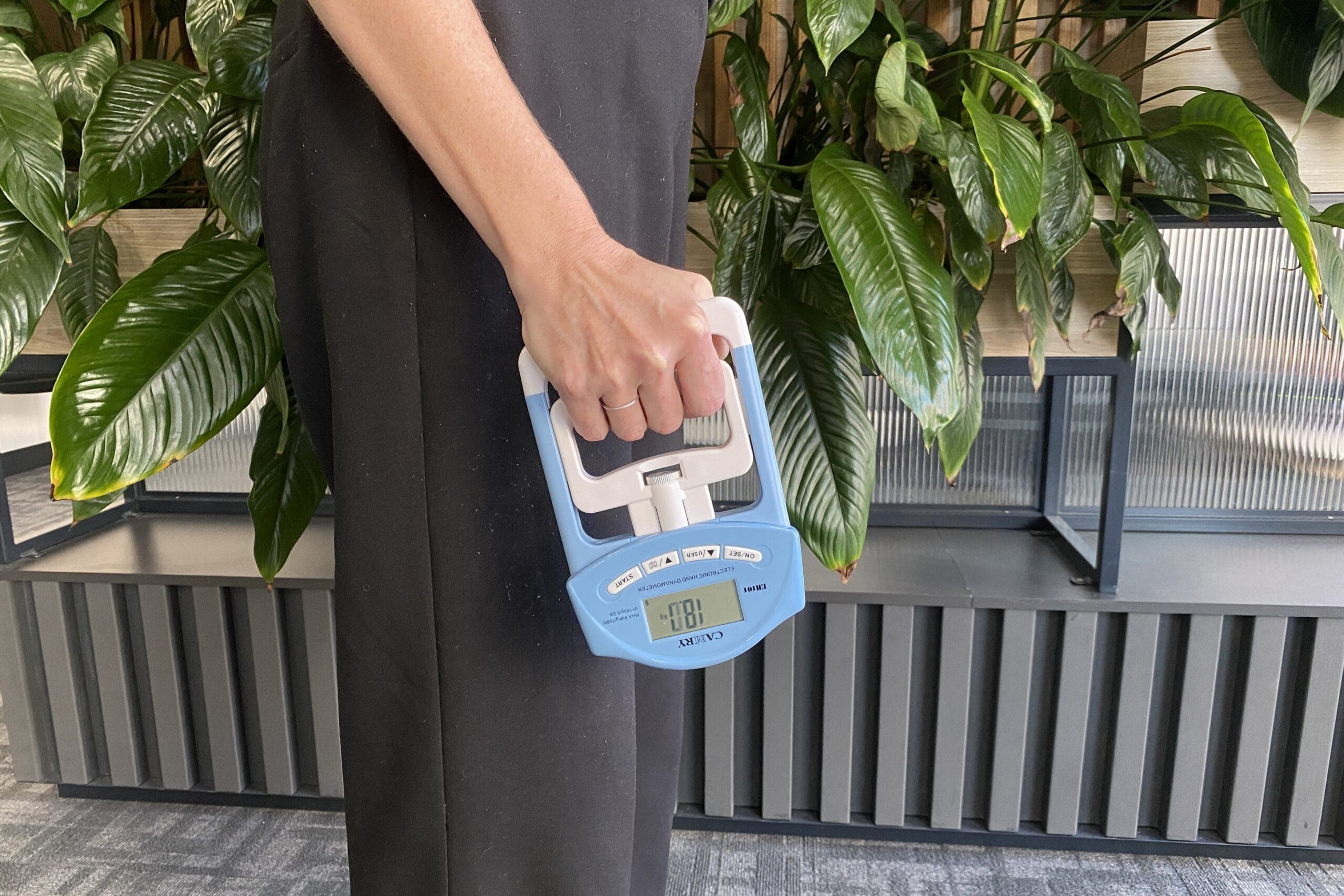
When we talk about physical fitness, grip strength might not be the first thing that comes to mind. Yet research increasingly shows that how firmly you can squeeze a hand dynamometer (which you do in your baseline consultations)isn’t just about hand power — it’s a powerful predictor of overall health, functional ability, and even lifespan.
Grip Strength: A Window into Whole-Body Health
Grip strength reflects the integrated performance of muscles, nerves, and metabolic systems. Because it involves coordinated muscle activation, nervous system control, and adequate vascular health, scientists describe grip strength as a proxy for overall muscle quality and physiological resilience. This is why clinicians sometimes consider it a functional vital sign — much like blood pressure or heart rate — that conveys a snapshot of health across the body.
The Link Between Grip Strength and Longevity
Multiple large-scale studies have found a strong, independent association between grip strength and longevity.
- A analysis of over 3 million adults found that a decrease in grip strength can impact lifespan.
- A UK study of over 500 000 adults revealed a link between low grip strength and an increased risk of cardiovascular disease, cancer, and respiratory conditions — even after adjusting for lifestyle factors and demographics.
Grip Strength and Quality of Life
Beyond longevity, grip strength correlates with functional independence and quality of life. Research have found that stronger grip is linked to better day-to-day function, including mobility and reduced risk of falls — key factors in maintaining independence with age.
Grip strength has also been connected to cognitive health, suggesting that stronger physical strength often parallels healthier brain aging.
Takeaway: Train Strength, Not Just Hands
It’s important to remember that grip strength doesn’t act in isolation. It tends to reflect overall muscular strength and activity levels, which means that regular resistance training and functional movement are essential for improving it — and supporting long-term health and longevity.
Maintaining a strong grip isn’t just about everyday tasks; it’s a valuable, evidence-based indicator of how well your body is aging and how resilient you’ll be in later life.
Download the free grip strength exercises here
Sources:
Why grip strength may be one of the best predictors of how well – and how long – you live https://www.nationalgeographic.com/health/article/grip-strength-health-longevity?utm_source=chatgpt.com
Associations of grip strength with cardiovascular, respiratory, and cancer outcomes and all cause mortality: prospective cohort study of half a million UK Biobank participants
https://pubmed.ncbi.nlm.nih.gov/29739772