

Did You Know That Linoleic Acid in Seed Oil Stays in Your Body for 2–3 Years and may affect Bone Health!
If you’ve been cooking with canola (rapeseed), sunflower, safflower, soybean, corn, or grapeseed oil, or eating processed and takeaway food, you’ve been loading your body with linoleic acid, an omega-6 fat that doesn’t just vanish, even when you switch diets, or only eat deep fried foods occasionally.
Linoleic acid isn’t like carbs or sugar that burn off quickly. It gets stored deep in your fat cells and cell membranes, where it can hang around for 2 to 3 years – or longer.
And while omega-6 is essential in small amounts, most modern diets are overloaded with it, especially from processed foods and seed oils.
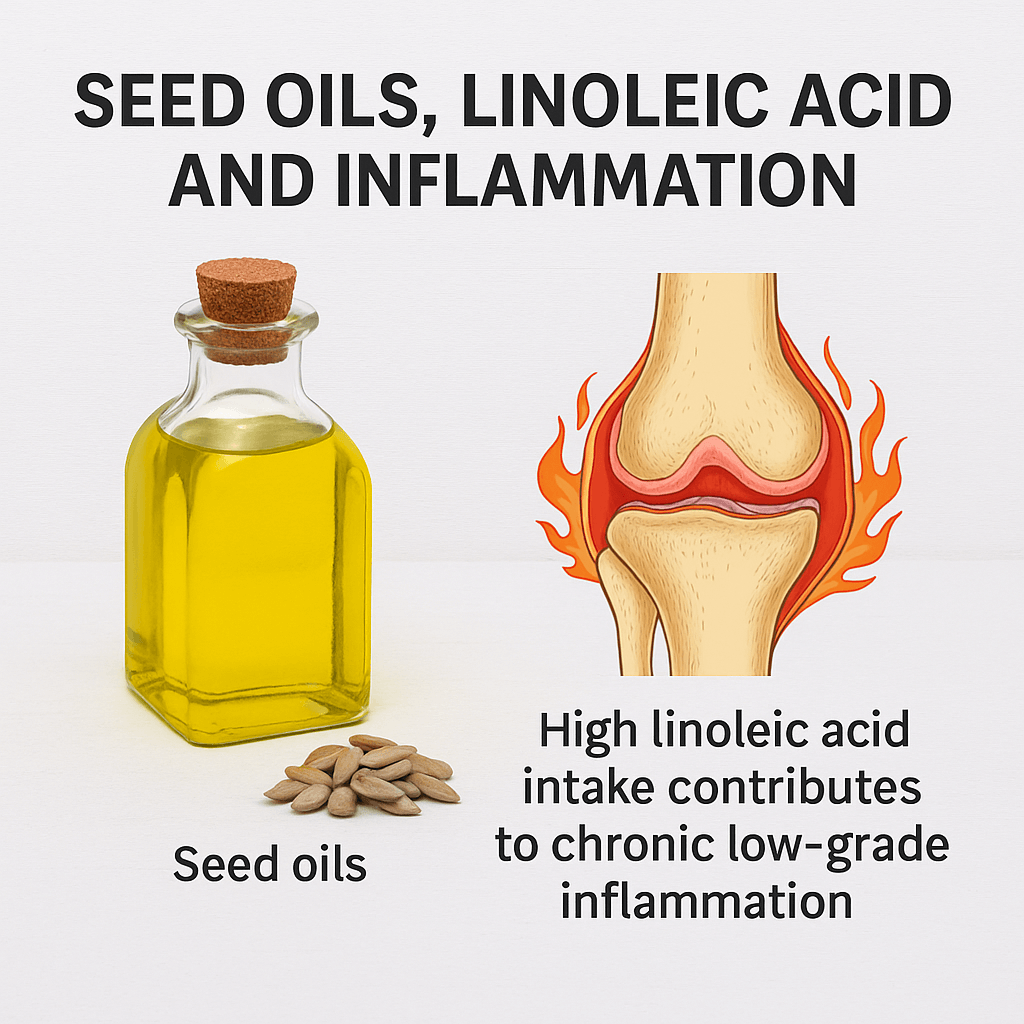
So Why Should You Care?
Too much linoleic acid = long-term inflammation risk.
Once it’s in your fat tissue, it:
- Alters cell signalling
- Promotes oxidative stress when heated or oxidised
- Disrupts metabolic health
- And here’s the kicker — it can even weaken your bones.
Linoleic Acid and Bone Health?
Research suggests that diets high in omega-6 and low in omega-3 can negatively impact bone density.
Here’s how;
- Chronic low-grade inflammation from high omega-6 intake can accelerate bone loss
- Oxi edative stress impairs osteoblasts (the cells that build bone)
- High LA levels may shift the body’s biochemistry toward bone breakdown, especially if you’re not getting enough calcium, vitamin D, or omega-3s
This is especially relevant if you’re trying to fight osteopenia or osteoporosis.
What to Do About It:
Eliminate all high-LA seed oils such as;
- Canola (rapeseed)
- Sunflower
- Safflower
- Soybean
- Corn
- Grapeseed
- Cottonseed
These oils are often refined, bleached, and deodorised — and oxidise easily during cooking, making them even more harmful.
Choose stable, bone-friendly fats:
- Extra virgin olive oil
- Avocado oil
- Macadamia oil
- Grass-fed butter or ghee (non grass-fed butter is higher in Omega 6 fats)
- Coconut oil (for high heat cooking)
And boost your omega-3 intake from fatty fish, flaxseed, chia, or algae — because omega-3s are anti-inflammatory and support bone metabolism.
Foods like grass fed butter and cheese, pasture raised eggs, sardines and nato are also rich in vitamin K2 and omega-3’s. These are essential for optimal bone, heart, and brain health, working to reduce inflammation and direct calcium into bones to support long term vitality.

Conclusion
Seed oils may be cheap, but they come at a biological cost. They don’t just impact your heart and waistline – they could be quietly weakening your bones too.
The good news? Your body is always trying to heal. Swap your oils, rebalance your fat intake, and give your bones — and your whole body — a better future.