
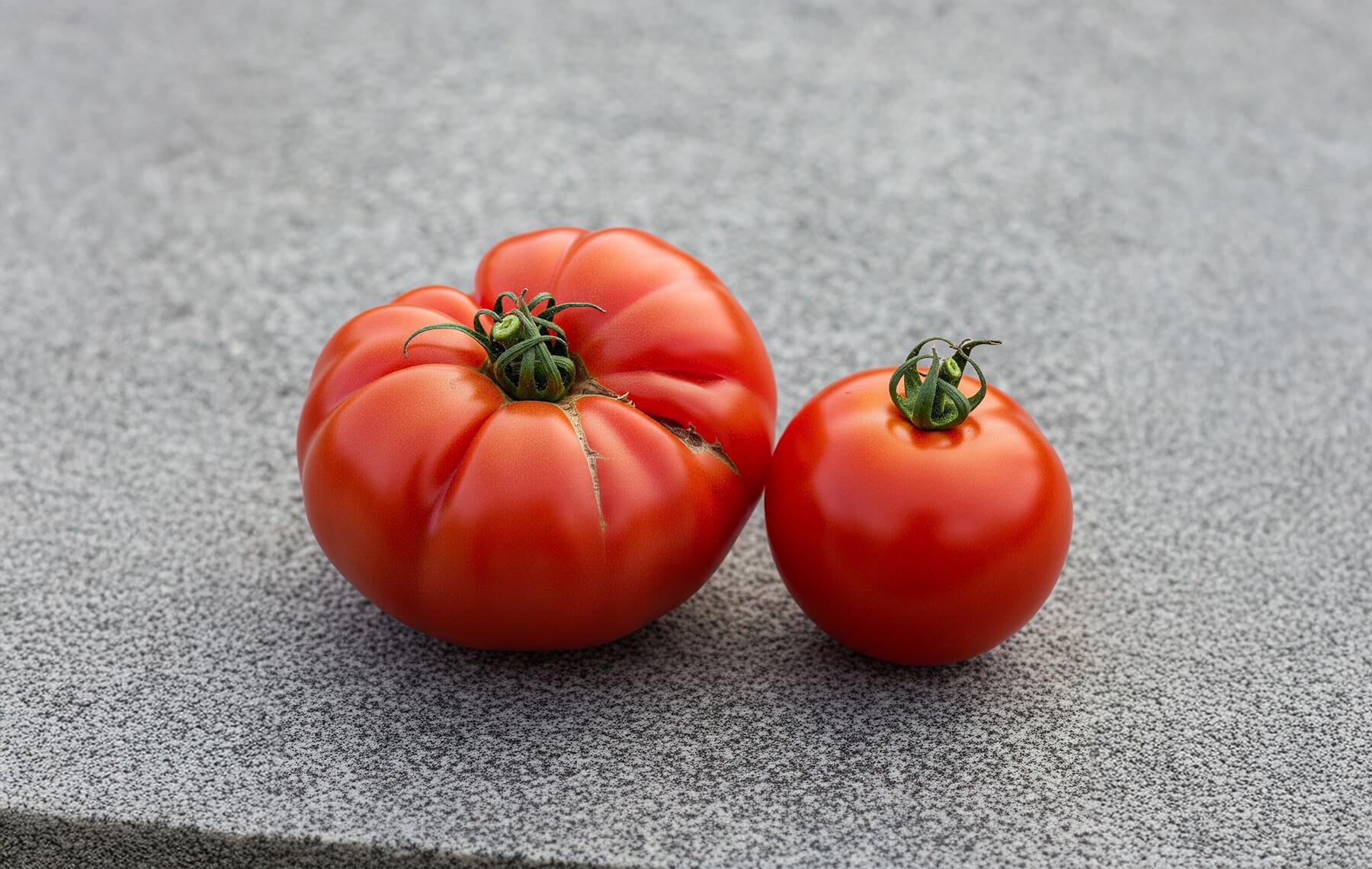
Don’t you love a story that starts with “once upon a time”. We can’t wait for the happy ending. But with nutrition the story took a wrong turn – and most people didn’t even notice!
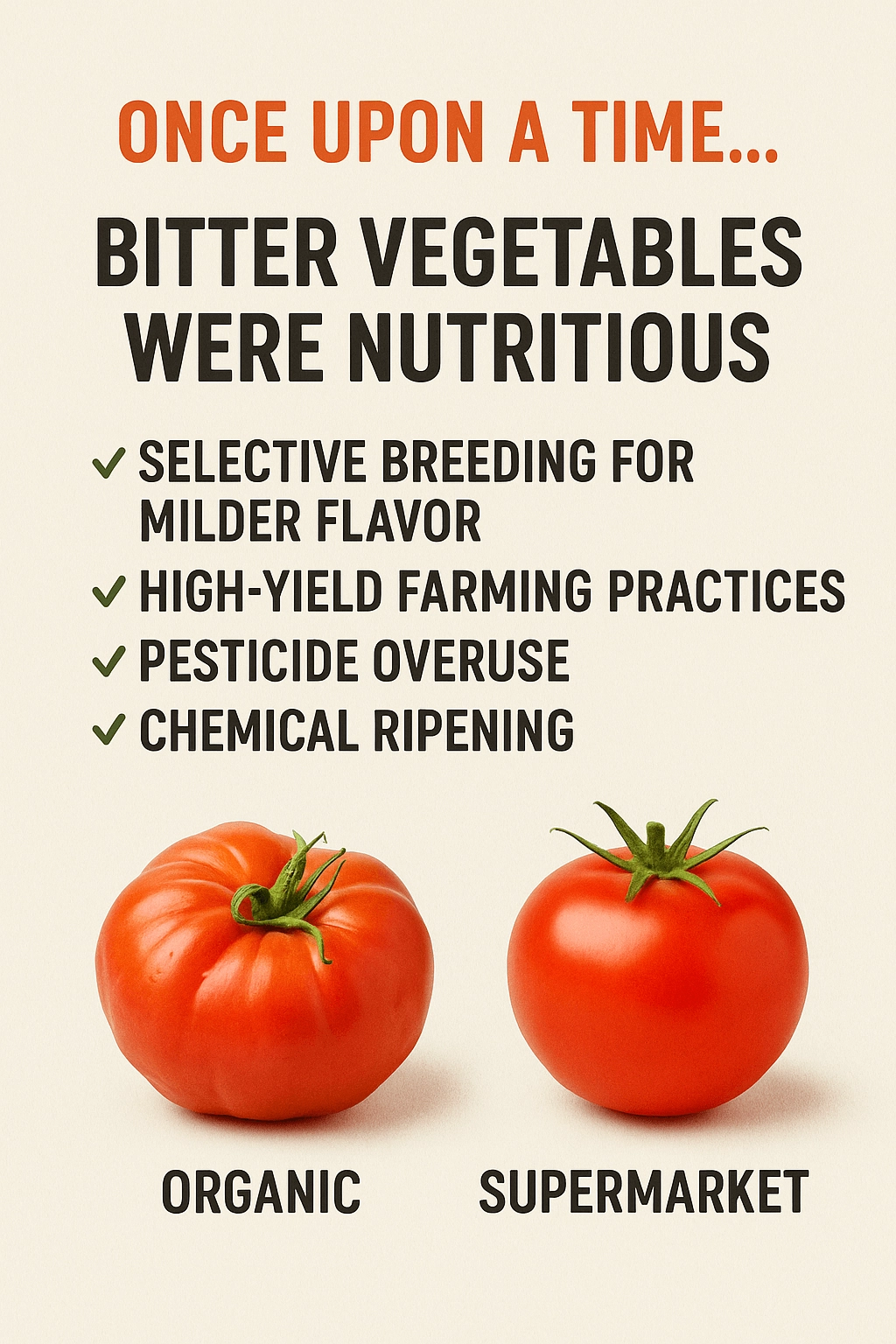
Once upon a time, a bitter taste in your vegetables meant one thing: nutrition. Those strong, sometimes unpleasant flavours came from powerful plant compounds like glucosinolates and polyphenols — the natural defence mechanism of plants that also happen to be packed with antioxidants and disease-fighting properties.
What is the Problem?
Over the past few decades, we’ve bred most of the bitterness out of our vegetables.
Why – to make them taste sweeter, more appealing, more “child friendly” and easier to sell. In doing so, we’ve also bred out a lot of the nutritional density that once made those foods so powerful for our health.
Conventional farming has reduced plant stress and weakened natural phytochemical production – resulting in mild tasting and visually perfect vegetables that have less nutritional value.
- Conventional farming focuses on yield using fertilisers and pesticides to protect plants from damage and stress – that same stress is what helps plants produce important nutrients as their natural defence. So, while the veggies may look perfect, they often have fewer of the natural compounds that make them good for you.
- Consumer preference for perfect looking vegetables, meaning supermarkets often discard less perfect looking produce, even though it is more nutritious.
- Supply chains often pick produce green to prevent damage in transit over long distances and warehouse for extended periods, then chemically ripen, preventing natural development of vitamins and phytonutrients.
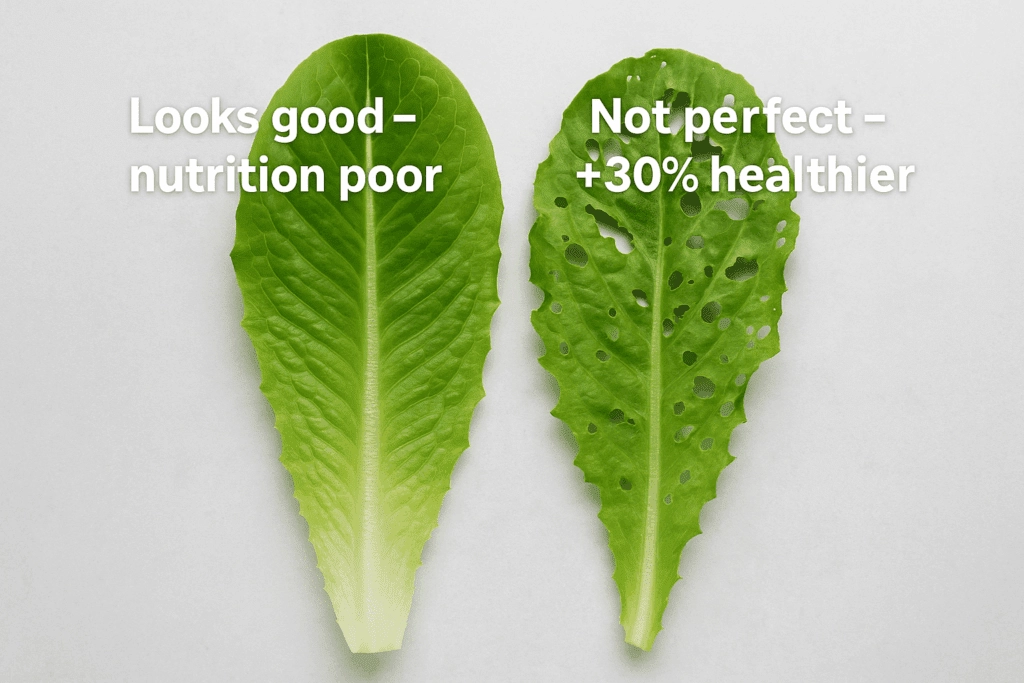
Most people don’t realise that an organic vegetable with insect nibbles - even if it looks imperfect - can be up to 30% more nutrient-dense especially in antioxidants and phytochemicals than flawless supermarket produce grown conventionally with synthetic fertilisers and pesticides.
The result is your supermarket lettuce leaf might look perfect, but it has far fewer nutrients than the one your grandmother grew in her garden. Looks can be very deceiving when it comes to choosing produce!
Plus, ultra-processed foods are engineered to be salty, sweet, and never bitter — hijacking your taste buds while providing little to no real nutrition. They leave you craving more but never truly satisfied, contributing to overconsumption and nutrient deficiency – overfed but undernourished!
Worse still, they hijack children’s developing taste preferences, conditioning them to reject naturally bitter and more nutrient-dense vegetables like broccoli, spinach, or rocket. Over time, this makes it harder to introduce healthier whole foods and reinforces a cycle of poor dietary habits from a young age.
So why does this matter?
Because we’re in the middle of a health crisis. Chronic conditions like osteoporosis, diabetes, obesity, and heart disease are skyrocketing — despite greater food choices than ever before and people supposedly “eating healthy.” The truth is, even when you eat your veggies, you may not be getting the micronutrients your body actually needs.
And these small changes matter – inflammatory grain fed beef and caged chickens, farmed seafood, inflammatory processed seed oils like canola and more reliance on unhealthy processed and fast foods add up when it comes to your health.
This is why smarter strategies which include nutrition, supplementation and programs like OsteoStrong® are becoming non-negotiables for long-term health.
It’s not your fault — but it is your responsibility to know.
👉 Start reading labels.
👉 Support local growers.
👉 Eat organic and choose bitter greens.
👉 Train your muscles and bones.
👉 And know that “fresh looking” does not always mean “nutritious.”
Modern food looks better.
But your health deserves better.