
A landmark long-term study of 324 healthy female twins has shown something remarkable: leg power is one of the strongest predictors of healthy cognitive ageing. Over a 10-year period, the participants with higher leg power at baseline preserved their memory, thinking speed and executive function significantly better than their weaker counterparts — even after accounting for genetics, lifestyle, education, cardiovascular health and dozens of other confounders.

In fact, the researchers found that leg power predicted cognitive performance and even total grey-matter volume in the brain 12 years later. Stronger legs equalled a stronger, healthier brain.
Claire J Steves 1, Mitul M Mehta, Stephen H D Jackson, Tim D Spector
Why leg power matters
The study showed that muscle power — not just activity levels — had a “striking protective effect” on:
- 10-year cognitive change
- Brain structure, including total grey matter
- Lateral ventricle size, a marker of brain ageing
Self-reported physical activity showed only a weak effect. It was leg power specifically that made the difference.
Where OsteoStrong fits: Monash data shows a 189% increase in leg power
This is where the recent Monash University OsteoStrong pilot study becomes so relevant.
While the twin study followed people for a decade, the Monash trial looked at what happens when you deliberately improve leg power safely and efficiently, in real people in real time.
After less than eight months of one 10 minute Spectrum session per week, participants recorded:
An average 189% increase in leg power
That is an extraordinary result, and exactly the type of intervention the twin study suggests may protect long-term cognitive health.
Why OsteoStrong works
OsteoStrong’s Spectrum system uses osteogenic loading, delivering brief, safe, high-intensity stimuli that strengthen:
- Muscle power
- Tendons and connective tissue
- Neuromuscular coordination
- Bone density
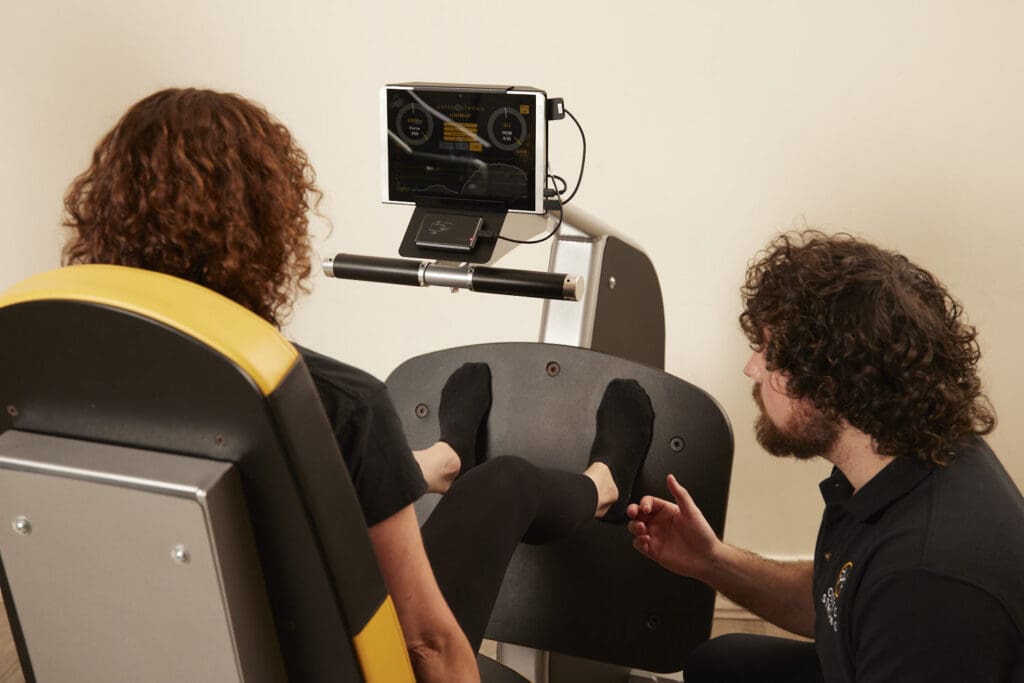
Leg power improves rapidly because the system trains the nervous system to recruit more fibres, more efficiently, something traditional exercise rarely achieves in older adults.
The big picture
The science is converging:
- Long-term research shows that leg power predicts brain health, cognitive ageing and structural preservation.
- Short-term intervention research at Monash shows we can dramatically increase leg power with minimal time and no strenuous exercise.
Together, they form a powerful message:
Building stronger legs may be one of the most effective ways to support long-term brain health — and OsteoStrong may be the fastest path to achieving it.