Not All Protein is Equal
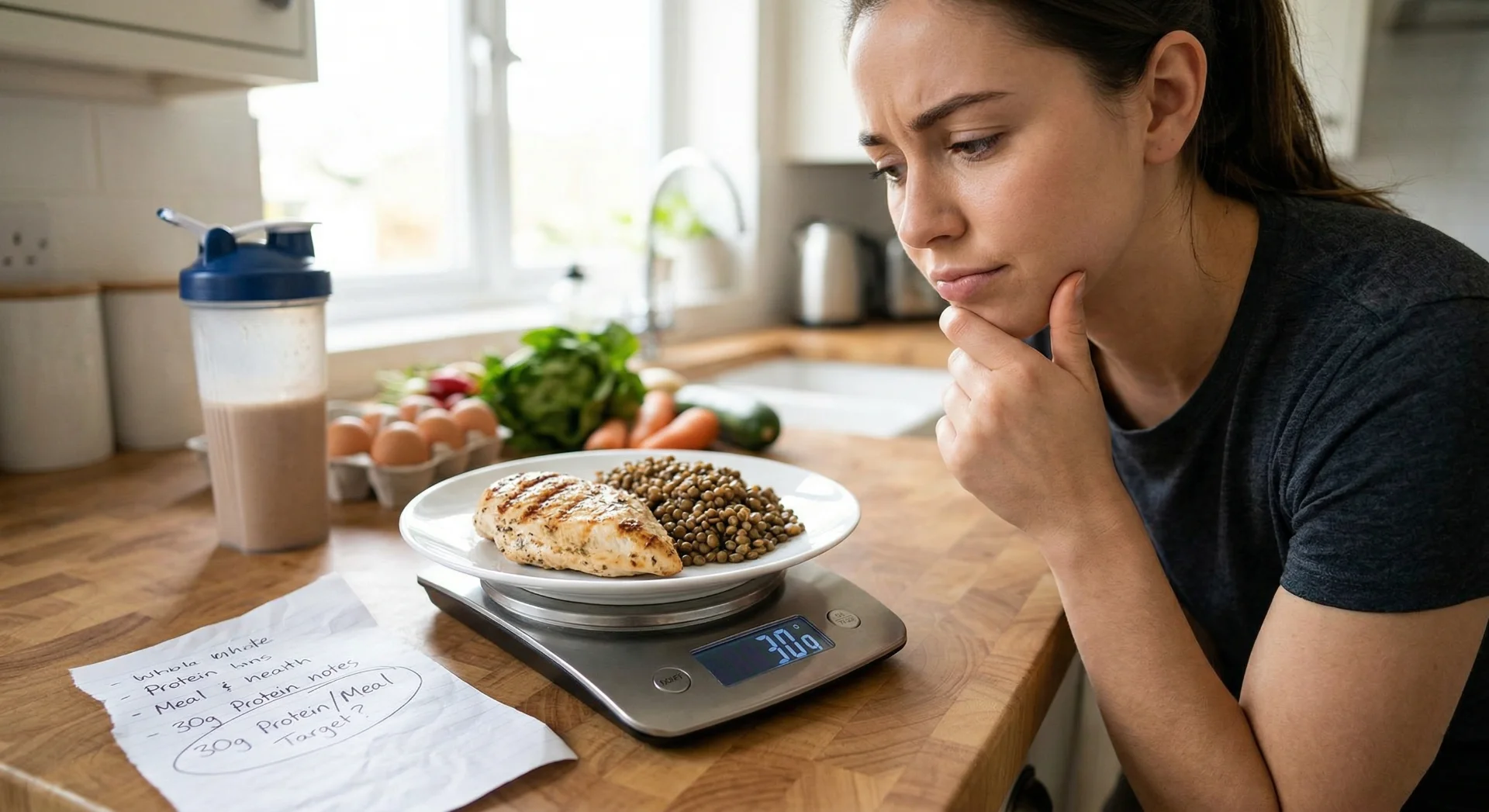
This pictogram reflects a common social media narrative showing how much of different foods is required to obtain 30 grams of protein—but it is both misleading and outdated.
Recent advances in nutritional science highlight that not all protein is equal. Using the DIAAS (Digestible Indispensable Amino Acid Score), we now understand that what matters is not just total protein, but the amount of bioavailable, complete amino acids that can be used for muscle and bone synthesis.
But when you factor in calorie load, the picture changes significantly—some foods require substantially more energy intake to deliver the same usable protein.
Why does this matter?
A recent review by the U.S. Food and Drug Administration indicates that adults require approximately 1.2–1.6 grams of protein per kilogram of body weight per day to maintain muscle mass. For older individuals—particularly those with sarcopenia or osteoporosis—requirements may increase to up to 2.0 grams per kilogram per day.
For an 80 kg adult, this equates to 96–160 grams of protein daily, which typically requires more than three meals per day, each containing around 30 grams of high-quality protein. In reality, most older adults fall well short of this target.
The difference in protein quality becomes clear when comparing foods. For example, 3.4 cups of lentils and a 140 g lean beef steak both deliver about 30 grams of bioavailable protein (based on DIAAS). However, lentils are lower in key amino acids such as methionine and cysteine, meaning they must be combined with other foods like grains or rice to form a complete amino acid profile. This does not mean that non-animal protein is bad, but it does generally have lower essential amino acid density and lower protein digestibility.
In contrast, animal proteins such as chicken and lean beef provide a complete amino acid profile with high bioavailability, making them a far more efficient source of protein for supporting muscle and bone health. Importantly, they also deliver this protein with a lower overall calorie load, which can be advantageous for individuals managing metabolic conditions such as obesity, insulin resistance, and type 2 diabetes.
| SOURCE | AMOUNT | TOTAL PROTEIN GRAMS | DIAAS SCORE | BIO AVAILABLE USABLE GRAMS | CALORIES Kcal | AMOUNT NEEDED FOR 30g USABLE | ACTUAL CALORIES FOR 30g PROTEIN | INCREASE IN KCal COMPARED TO CHICKEN |
|---|---|---|---|---|---|---|---|---|
| LENTILS | 1.7 cups | 30 | 0.5 | 15 | 390 | 3.4 cups | 780 | 322% |
| ALMONDS | 0.25 cups | 30 | 0.4 | 12 | 200 | 0.6 cups | 480 | 159% |
| GREEK YOGHURT | 1.5 cups | 30 | 1 | 30 | 220 | 1.5 cups | 220 | 19% |
| BLACK BEANS | 2 cups | 30 | 0.6 | 18 | 450 | 3.3 cups | 740 | 300% |
| WHOLE EGGS | 5 | 30 | 1.1 | 33 | 350 | 4.6 | 322 | 74% |
| SALMON | 140g | 30 | 1 | 30 | 280 | 140g | 280 | 51% |
| CHICKEN BREAST | 113g | 30 | 1 | 30 | 185 | 113g | 185 | 0% |
| LEAN BEEF STEAK | 140g | 30 | 1 | 30 | 260 | 140g | 260 | 41% |
| GROUND TURKEY | 160g | 30 | 1 | 30 | 300 | 160g | 300 | 62% |
| SOY | 250g | 30 | 0.9 | 27 | 230 | 280g | 260 | 41% |
How OsteoStrong® Helps
At OsteoStrong®, we teach that bone and muscle health is built on four essential pillars: nutrition, medical factors, lifestyle, and exercise. Nutrition provides the raw materials—adequate protein, vitamins, and minerals—required to support tissue repair and growth.
Medical conditions and medications can either support or interfere with this process, while lifestyle factors such as physical activity, smoking, alcohol consumption, and recovery habits play a critical role in long-term outcomes.
However, the most overlooked pillar is exercise—specifically, the application of sufficient mechanical load to stimulate osteogenesis. Research consistently shows that bone only adapts when exposed to high-magnitude forces, typically well above what is achieved through conventional exercise. Research also shows that exercise frequency is irrelevant, which is why walking, jogging and conventional gym workouts do not improve bone density.
This osteogenic loading threshold is difficult to reach safely in traditional settings, but is precisely what OsteoStrong® delivers in a controlled, highly safe and efficient, once-weekly session designed to stimulate bone growth and improve muscle strength.