For decades, cancer has been framed as a problem of genes, bad luck, or toxins. But modern research now tells a different story.
Many of today’s most common cancers are rising alongside something else:
Metabolic dysfunction — poor blood sugar control, insulin resistance, chronic inflammation, and loss of muscle.
What’s often missing from the conversation is this:
Bone and muscle health sit at the centre of metabolic health — and therefore cancer risk.
Muscle: Your Body’s Metabolic Engine
Skeletal muscle isn’t just for movement or strength.
It is the largest metabolic organ in the body.
Healthy muscle:
- Clears glucose from the bloodstream
- Improves insulin sensitivity
- Reduces chronic inflammation
As muscle mass and strength decline with age or inactivity, the opposite happens:
- Blood sugar control worsens
- Insulin levels rise
- Inflammation increases
This creates an internal environment that favours cancer growth.
Add to this a high processed diet high in sugar, and the result is people with low muscle mass have higher cancer risk and poorer outcomes — even if they are not overweight.
Your Skeleton is More Than a Just a Frame
Bone is not passive.
It is living, hormone-signalling tissue.
Healthy bone sends signals that help regulate:
- Metabolism
- Muscle function
- Hormonal balance
When bone is under-loaded through sedentary lifestyles or ageing, these signals weaken.
Bone density declines, muscle loss accelerates, and fat infiltration increases.
This creates a vicious cycle:
Bone loss → muscle loss → metabolic dysfunction → increased disease risk
The Bone–Muscle–Metabolism Connection
Bone and muscle work together as a system.
When both are strong:
- Blood sugar control improves
- Inflammation is reduced
- Hormones are better regulated
- The body becomes metabolically resilient
When both weaken:
- Insulin resistance rises
- Inflammatory signals increase
- Cancer risk increases over time
This helps explain why cancers linked to metabolism — such as breast (post-menopausal), colorectal, pancreatic, and liver cancer — have risen alongside sedentary lifestyles and muscle loss.
Why Strength Matters More Than Movement Alone
The World Health Organization recognises physical inactivity as a cancer risk factor.
But emerging evidence shows that intensity and loading matter, not just movement.
Walking is good.
But bones and muscles require meaningful force to stay strong.
Without sufficient loading:
- Bone does not adapt
- Muscle does not grow
- Metabolic health continues to decline
A New Way to Think About Cancer Prevention
Cancer prevention is no longer just about avoiding harm.
It’s about building capacity;
- Strong muscles that function as glucose sinks
- Strong bones that send healthy metabolic signals
- A body that is resilient, adaptive, and robust
This is why bone and muscle health are not optional as we age.
They are foundational.
Why This Matters
Weak bones and muscles create a body that is metabolically permissive to disease….
Strong bones and muscles help create a body that resists it.
Protecting your skeleton isn’t about vanity or fitness trends.
It’s about protecting the biological foundation of long-term health.
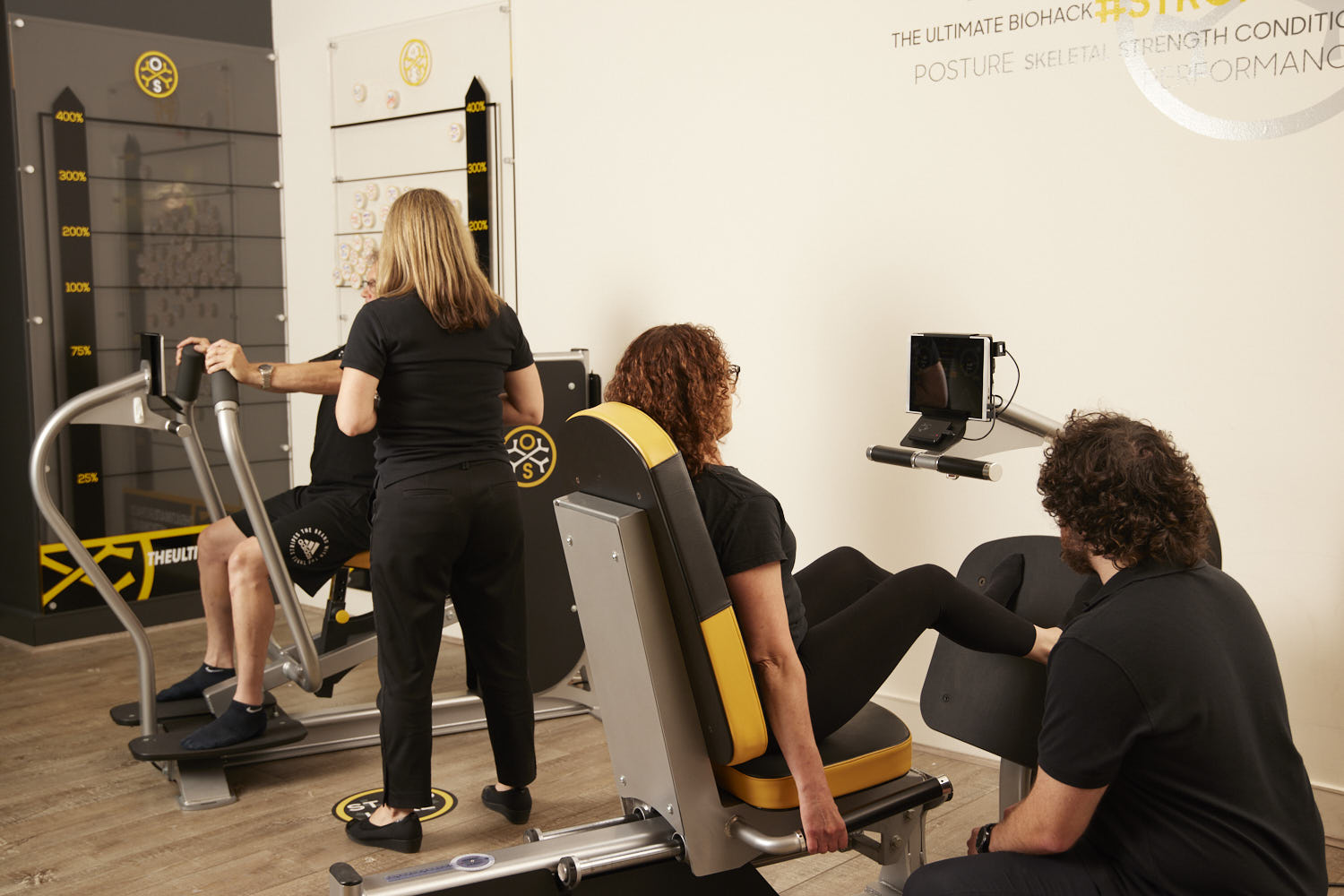
And that is what OsteoStrong® is designed to support – in one convenient, efficient session each week.
Start building a stronger foundation for your future today. Book a session with OsteoStrong® and discover what your body may still be capable of.