
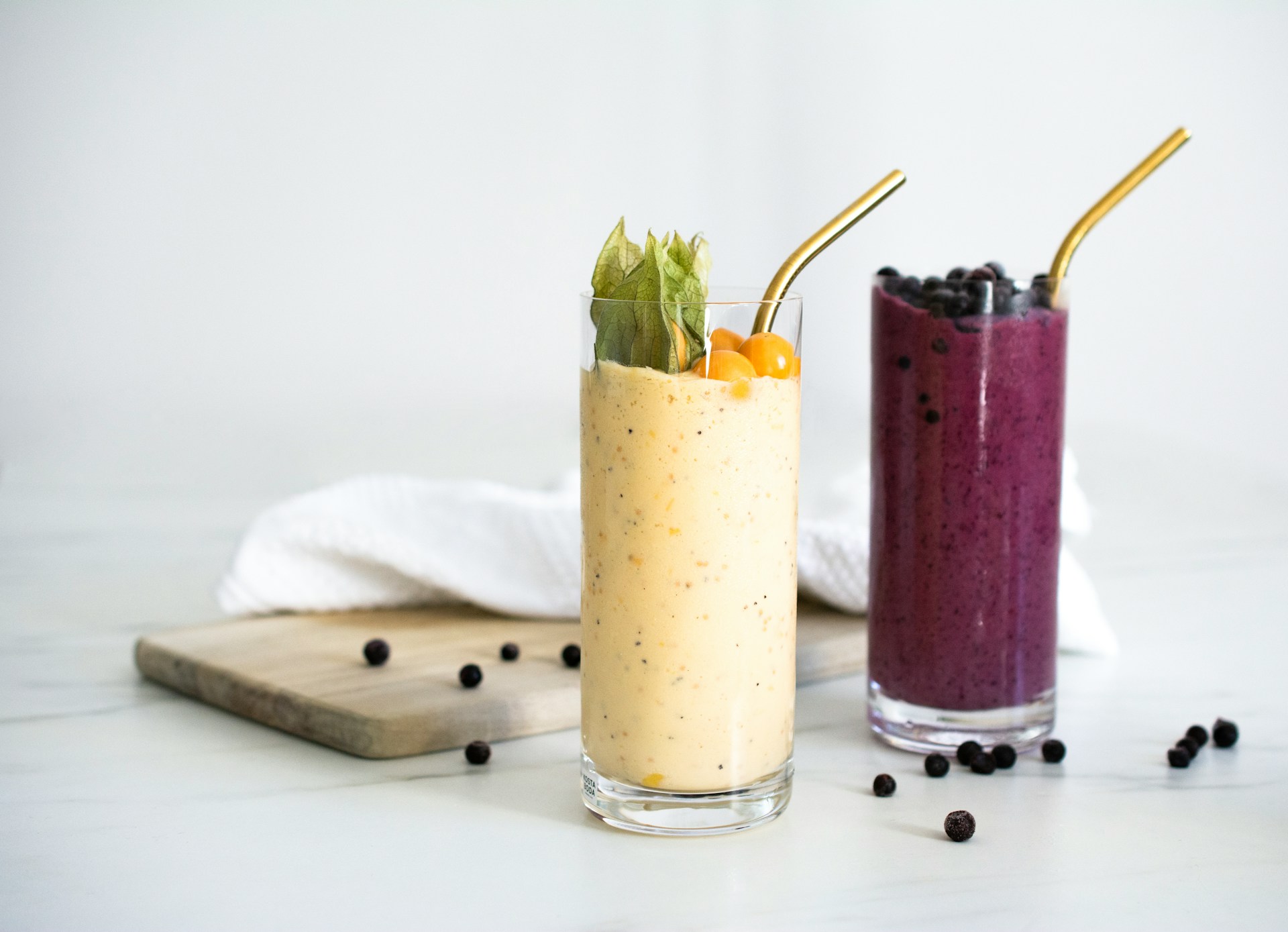
We tend to think about food when we think about calories, weight and metabolic health. But increasingly, a surprising amount of our daily energy intake is arriving in a glass or takeaway cup.
Coffee and tea themselves are not the problem. Black coffee contains only a few calories. Plain tea is essentially calorie-free. Matcha contains very few calories in the quantities normally used and provides plant compounds including catechins.
The problem is what we have gradually learned to put around them.
The Dessert in a Glass
Walk into almost any café today and a simple coffee can become a 300-calorie drink remarkably quickly. Add oat milk, syrups, sugar, cream, chocolate powder or caramel and what started as a beverage begins looking metabolically more like a snack — and sometimes a dessert.
A plain espresso might contain 2–5 calories. A long black is similarly negligible. But depending on size and ingredients, a milk-based coffee can easily provide 100–250 calories, while large flavoured café drinks can reach 300–500 calories or more.

The same thing is happening with matcha.
Matcha itself isn’t particularly calorie-dense. Around 2-3 grams of matcha powder contributes only a handful of calories. But a large matcha latte made with oat milk and sweetened with sugar, honey or flavoured syrup can contain 200–350 calories or more.
It is no longer simply a cup of tea. It can be a small meal.
Oat Milk Isn’t Oats and Water
Plant milks are another good example of the healthy halo effect.
Oat, almond, soy and other plant-based milks can certainly form part of a healthy diet, and fortified varieties can provide useful calcium and other nutrients. But they are manufactured foods, and their nutritional profiles vary enormously.
Some contain added oils, sugars, emulsifiers, gums and flavourings. Barista oat milks in particular are formulated to produce the creamy texture and foaming characteristics people expect in coffee. That can mean more carbohydrate and fat — and consequently more calories.
A cup of unsweetened almond milk might contain only 30–50 calories, while a cup of oat milk commonly provides roughly 100–160 calories, depending on the brand. Dairy milk also contains calories, of course — approximately 90–160 calories per cup, depending on whether it is skim, reduced-fat or full cream.
The lesson isn’t that oat milk or dairy milk is bad. It is simply that milk isn’t water.
And neither is a latte.
The Smoothie Trap
Smoothies and juice-bar drinks are another classic example of a beverage becoming a meal. A Boost Juice may contain plenty of nutritious ingredients, but depending on what you order and the size, you can easily drink 300–500 calories or more. Add yoghurt, juice, sorbet, nut butter or protein ingredients and the number can climb further.
There is also an important difference between eating fruit and drinking it. Eating an apple, banana and berries takes time, involves chewing and generally provides greater satiety. Blend fruit with juice and other ingredients and it becomes remarkably easy to consume a large amount of energy very quickly.
That doesn’t make smoothies unhealthy. A 400-calorie smoothie can be perfectly reasonable if it is effectively your breakfast or post-training meal. The problem comes when we eat breakfast and then have the smoothie as a drink without mentally counting it as another 300–500 calories.
The simplest rule is: if your drink contains the calories of a meal, treat it as a meal—not as hydration.
One Doesn’t Matter Much. Four Might.
This is where the mathematics of weight gain becomes important.
A 200-calorie latte is unlikely to make any meaningful difference to your health by itself. But if you routinely drink three of them, that is around 600 calories before considering breakfast, lunch, dinner, snacks or alcohol.
Do that every day and those calories matter.
The human body is more complicated than a simple calorie calculator. Hormones, appetite, muscle mass, activity, sleep, genetics and metabolic health all influence what happens to the energy we consume. But we cannot escape energy balance altogether. Consistently consuming more energy than our body requires has consequences.
Liquid calories can be particularly easy to overlook because psychologically we often don’t count drinking in the same way we count eating.
Energy Drinks: Energy You May Not Need
Energy drinks take this another step.
Many combine substantial amounts of caffeine with sugar, flavourings and other stimulatory ingredients. A large energy drink can deliver 150–250 calories and 40–60 grams of sugar, although sugar-free alternatives obviously contain far fewer calories.
For someone undertaking prolonged endurance exercise, there may be circumstances where rapidly available carbohydrate and caffeine have a performance role.
But sitting at a desk isn’t an endurance event.
Neither is driving to work.
If you are tired because you slept for five hours, repeatedly stimulating yourself with caffeine and sugar doesn’t correct the underlying problem. It temporarily changes how tired you feel.
Sports Drinks Have a Place — But Know the Place
The same common sense should apply to electrolyte and sports drinks.
If you are cycling for three hours, running a marathon, exercising intensely in extreme heat or losing large amounts of fluid and sodium through sweat, carbohydrate and electrolyte replacement can be genuinely useful.
They can also be valuable in some circumstances involving dehydration, illness, vomiting or diarrhoea.
But most people doing a 45-minute gym workout, Pilates class, walk or moderate exercise session simply don’t need a high-calorie sports drink.
Water is generally perfectly adequate.
Ironically, someone can go to the gym hoping to lose weight, burn 250 calories exercising and then drink most of those calories straight back afterwards because the bottle says sports, electrolytes, natural or performance.
Electrolytes themselves don’t have to contain significant calories. If you genuinely want electrolyte replacement without additional energy, low- or zero-sugar formulations are available.
As We Get Older, the Margin Becomes Smaller
This becomes even more important as we age, particularly if we have become less active, lost muscle or developed insulin resistance and other metabolic problems. A younger, highly active person may burn through an extra few hundred calories relatively easily.
A sedentary older person often has a much smaller energy requirement and less metabolic flexibility, so those same liquid calories can become significant. A 300-calorie sweetened coffee, smoothie or juice might represent a surprisingly large proportion of the day’s energy needs while providing relatively little protein, fibre or other nutrition needed to protect ageing muscle and bone.
As our calorie requirements fall, the nutritional quality of those calories matters more, not less. We have less room for calories that provide plenty of energy but very little of what an ageing body actually needs.
Hydration Still Matters
None of this means we should drink less.
Hydration becomes increasingly important as we age because our sensation of thirst can become less reliable. Dehydration can affect physical performance, concentration, blood pressure and general wellbeing.
But hydration doesn’t require every drink to contain energy.
Water should remain the foundation. Tea, coffee and other low-calorie beverages can contribute to daily fluid intake too. Despite the persistent myth that coffee automatically dehydrates you, normal amounts of coffee still contribute fluid.
The question isn’t simply “Am I drinking enough?”
It is also “What am I drinking?”
Don’t Be Fooled by the Healthy Halo
Green doesn’t automatically mean healthy.
A beautiful green matcha latte photographed beside a bowl of berries may look healthier than a can of soft drink. Sometimes it is. But if it contains a large quantity of oat milk, several pumps of syrup and added sugar, we should judge it by what is actually in the glass rather than its colour.
The same applies to smoothies, juices, protein shakes, kombucha, flavoured coffees, sports drinks and supposedly natural energy drinks.
Read the label. Look at the serving size. Look at the sugar. Look at the total calories or kilojoules. And remember that the bottle may contain two servings even though almost everyone drinks the whole thing.
A supposedly “healthy” fruit smoothie can easily contain 300–500 calories or more, and because blending breaks down the fruit’s physical structure and makes it quicker to consume, it can produce a faster and sometimes higher blood-glucose response than eating the same fruit whole, particularly when juice or added sugars are included.
You don’t need to become obsessive about counting every calorie.
You simply need to recognise when a drink has stopped being hydration and started becoming food.
The Important Principle
Drink primarily for hydration. When your drink contains significant calories, count it as part of your food intake.
Enjoy the oat latte. Enjoy your matcha. Have the occasional extravagant café coffee if you love it.
Healthy ageing isn’t about being perfect.
It is about understanding the small things we repeat every day. One 250-calorie drink doesn’t matter very much. Several every day, compounded over months, years and decades, can matter enormously.
The calories we don’t notice still count.