When people think about bone health, they usually think about calcium and vitamin D.
When they think about muscle, they usually think about protein.
But quietly working in the background is another essential group of nutrients that rarely gets the attention they deserves: B vitamins.
At OsteoStrong, one of our Four Pillars of Bone and Muscle Health is nutrition, because the body simply cannot rebuild strong tissue without the right raw materials and cellular support systems in place.
And this is where B vitamins become incredibly important.
Your Body Runs on Energy, Not Just Food
Muscle is not static tissue.
It is living, electrical, energy-hungry tissue.
Every muscle contraction, every repair process after exercise, every nerve signal, every balance correction, and every rebuilding process inside bone requires energy.
That energy comes in the form of ATP (adenosine triphosphate) — the body’s cellular energy currency.
B vitamins play a central role in helping convert food into usable cellular energy.
In simple terms:
B vitamins help turn food into force.
Without adequate B vitamins, the body may struggle to efficiently convert carbohydrates, fats and proteins into the energy required for optimal muscle, nerve, and bone function.
This is why fatigue, weakness, poor recovery and reduced physical performance can sometimes be linked to underlying nutritional deficiencies that many people never consider.
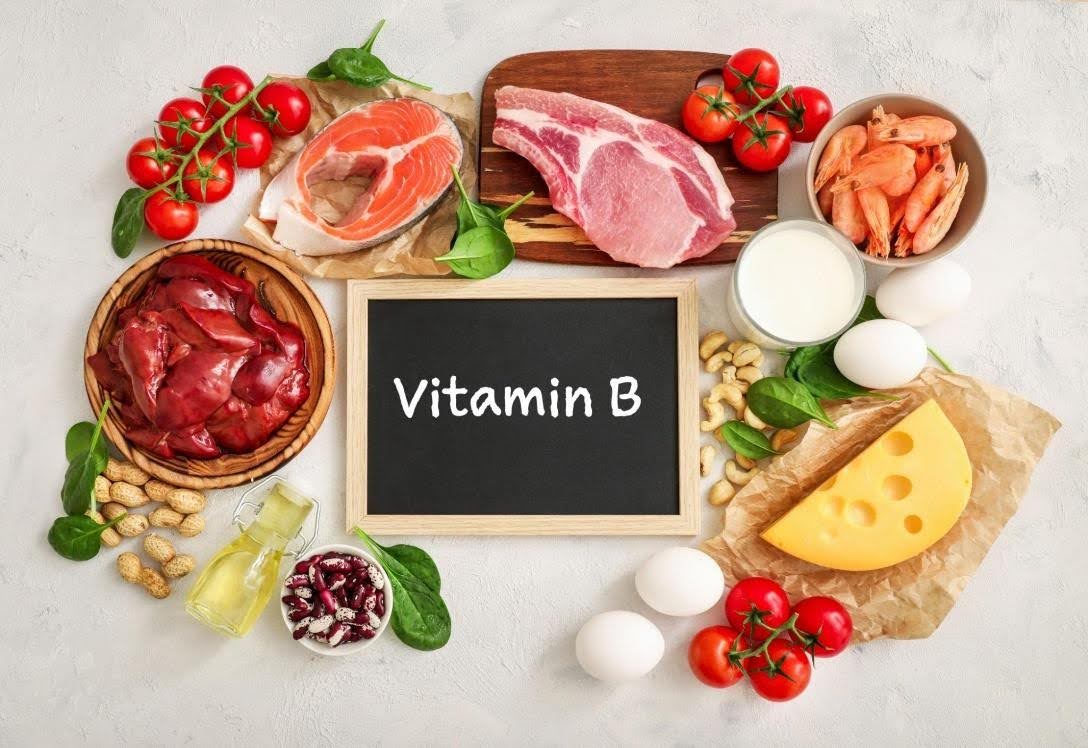
B vitamins are the essential nutrients that help the body turn food into usable energy, support muscle and nerve function, assist protein metabolism, help produce red blood cells, and support healthy ageing. They are particularly important for energy production, recovery, brain function, bone quality and maintaining strength as we age.
- B1 — Thiamine: energy production, nerve, and muscle function
- B2 — Riboflavin: cellular energy, repair, and antioxidant support
- B3 — Niacin: ATP production, circulation, skin, and nerve health
- B5 — Pantothenic Acid: energy metabolism and hormone production
- B6 — Pyridoxine: protein metabolism, neurotransmitters, muscle, and bone health
- B7 — Biotin: fat and carbohydrate metabolism, hair, skin, and nails
- B9 — Folate: DNA repair, cell growth, and methylation
- B12 — Cobalamin: nerves, red blood cells, energy, and bone metabolism
Methylation of B Vitamins is Important
Another important and often overlooked factor is methylation. This refers to your body’s ability to convert certain B vitamins into their active, usable forms. Research suggests that up to 40–50% of the population may carry genetic variations (such as MTHFR mutation) that can reduce methylation efficiency.
This affects how well some people utilise folate (B9), B12 and B6, potentially influencing energy production, detoxification, homocysteine regulation, nervous system function, iron metabolism, and bone and muscle health.
This is why preventative health practitioners recommend checking B12, folate, homocysteine, methylmalonic acid, iron studies, and thyroid markers, rather than just guessing.
Today, genetic testing to assess methylation-related pathways — including common variants such as MTHFR — is relatively accessible and affordable, allowing people to better understand how efficiently their body may activate and utilise key nutrients such as folate, B12 and other B vitamins.
In some cases, active forms such as methylfolate, methylcobalamin, Iron Bisglycinate, and P5P (activated form of Vitamin B6) may be more appropriate, but supplementation — particularly iron, iodine, or thyroid-related nutrients — should be guided by proper testing and medical advice.
Bone Is Living Tissue — Not Dead Scaffolding
One of the biggest misconceptions about bone is that it is simply a rigid calcium structure.
It is not.
Bone is living, metabolically active tissue that is constantly remodelling and adapting to the demands placed upon it.
And healthy bone depends on far more than calcium alone.
The key B vitamins involved in bone health are B6, folate (B9) and B12.
These nutrients help regulate homocysteine, a compound associated with poorer bone quality and impaired collagen integrity when elevated.
This matters because bone is a collagen-mineral structure.
The collagen matrix gives bone flexibility and resilience, while minerals provide hardness and compressive strength.
Without healthy collagen architecture, bone can become more brittle and structurally compromised even when calcium intake appears adequate.
Why Modern Diets Can Fall Short
Many people today are overfed but undernourished.
Ultra-processed foods, restrictive diets, chronic stress, alcohol, ageing, poor digestion, reduced stomach acid, thyroid dysfunction, genetics, and common medications can all interfere with B vitamin intake or absorption.
This becomes increasingly important as we age.
Older adults often absorb B12 less efficiently, while vegetarians and vegans may struggle to obtain adequate B12 and iodine naturally, because these nutrients are primarily found in meaningful amounts in animal foods and seafood.
And yet these nutrients influence:
- cellular energy production
- nerve health
- red blood cell production
- protein metabolism
- muscle function
- thyroid regulation
- and bone quality.
In other words, they help support the entire biological machinery that keeps us physically capable.
Nutrition Alone Is Not Enough
At OsteoStrong, we often say:
Nutrition supplies the raw materials.
But the body still needs a reason to adapt.
That reason is load.
Bones and muscles respond to demand.
Without adequate physical stimulus, the body has little reason to maintain or rebuild stronger tissue as we age.
This is why simply taking supplements while remaining sedentary often produces disappointing outcomes.
The body adapts to magnitude of load and repeated signals over time.
That is why the OsteoStrong® system focuses on safe, supervised osteogenic loading designed to provide the body with a meaningful mechanical stimulus in a controlled and time-efficient way.
B vitamins help convert food into energy.
Protein provides the building blocks.
Minerals support structure.
And osteogenic loading gives the body the signal to rebuild.
The Body Adapts for Better or for Worse
Strong bones and muscles are not built from calcium alone.
They are built from:
- adequate protein
- vitamins and minerals
- healthy cellular energy production
- hormonal and metabolic support
- recovery
- and sufficient mechanical stimulus.
That is why healthy ageing requires a whole-body approach.
Because the real goal is not simply to live longer.
It is to remain strong enough to keep living fully.
To travel.
To remain independent.
To stay active with family and friends.
To avoid falls and fractures.
And to maintain the confidence that comes from trusting your body.
At OsteoStrong®, that is exactly how we help people.