If you’ve been diagnosed with osteoporosis or low bone density, you’ve probably been told to “be careful.”
That’s good advice—but that does not mean avoiding strength training.
Strength training, when performed correctly, is one of the most powerful tools to maintain bone, improve balance, and reduce fall and fracture risk.
The key is how you lift.
The Golden Rule: Form First, Always
Physiotherapy guidelines consistently emphasise:
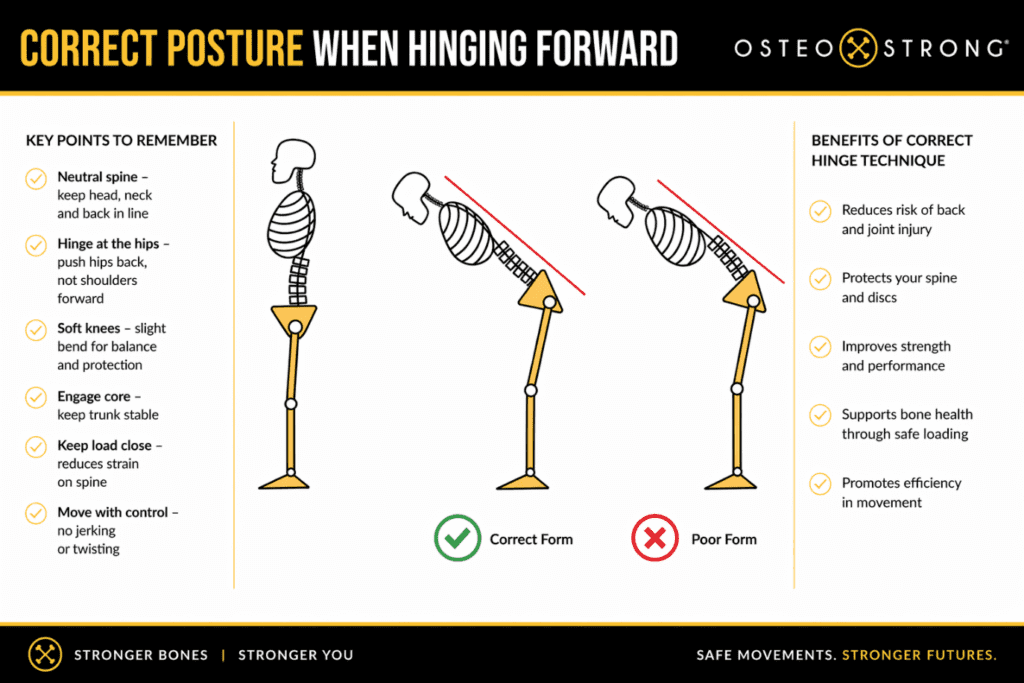
- Neutral spine – avoid rounding or excessive twisting
- Hip hinge, not spinal bend – load through hips and legs
- Controlled, slow movements – no jerking or momentum
- Breathe properly – avoid holding your breath under load
- Keep loads close to the body – reduces spinal strain
Poor form—not weight lifted—is usually the biggest risk factor for injury.
Movements to Be Careful With
If you have osteoporosis or osteopenia, take extra care with:
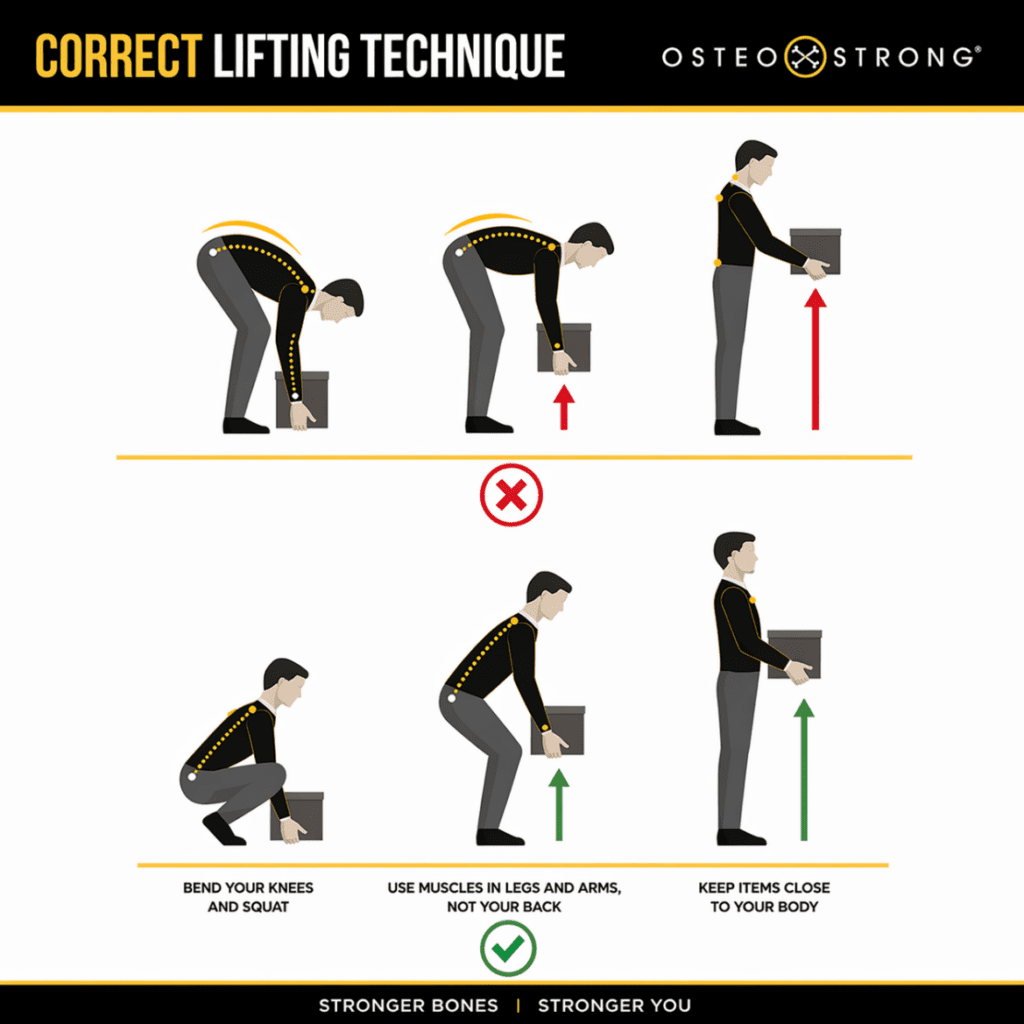
- Bending forward while lifting – Deep spinal flexion
- Twisting movements, especially combined with bending
- High-impact or uncontrolled loading
- Heavy Weightlifting without supervision – form is critical
These positions can increase stress on the vertebrae and elevate fracture risk.
Most importantly, consult your doctor before beginning any new exercise program or activity that places unfamiliar or increased stress on your muscles or bones.
What Safe Strength Training Looks Like
A safe, effective program should include:
- Supervised sessions
- Gradual progression of load – start slow and low
- Focus on posture, alignment, and stability
- Exercises that build muscle strength in legs and core, improve posture and walking gait, and balance
- Building strength across your whole musculoskeletal system – bones, muscles, tendons, ligaments, and facia
The goal is not just stronger muscles—it’s a stronger, more resilient body that helps protects your bones.
Keep in mind that young people with strong bones but poor muscle strength and stability can still fracture when they fall. In contrast, older individuals with lower bone density—but strong muscles, tendons, and good balance—are often better able to absorb impact and even prevent the fall altogether.
Where OsteoStrong® Fits In
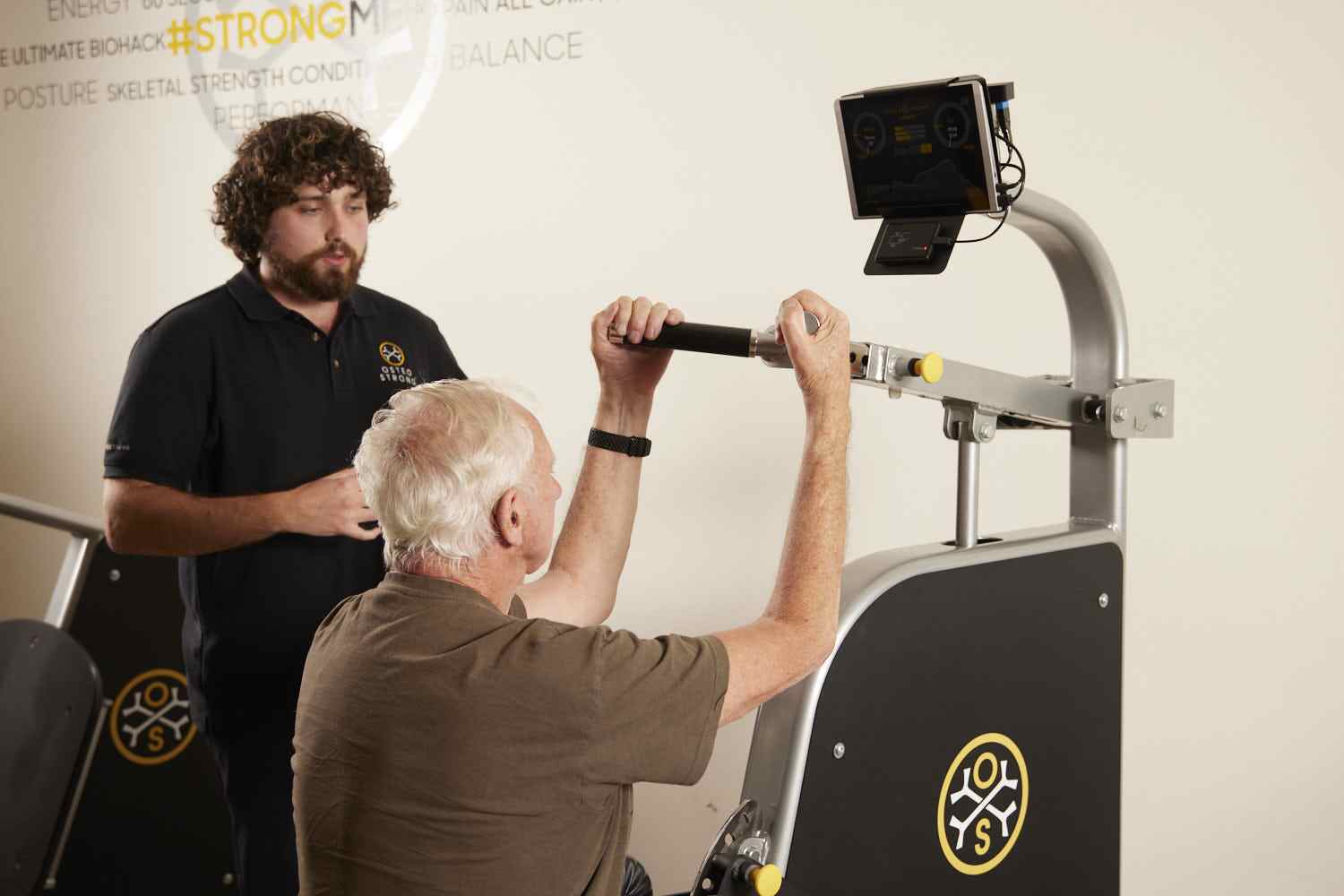
At OsteoStrong®, these principles are built into every session.
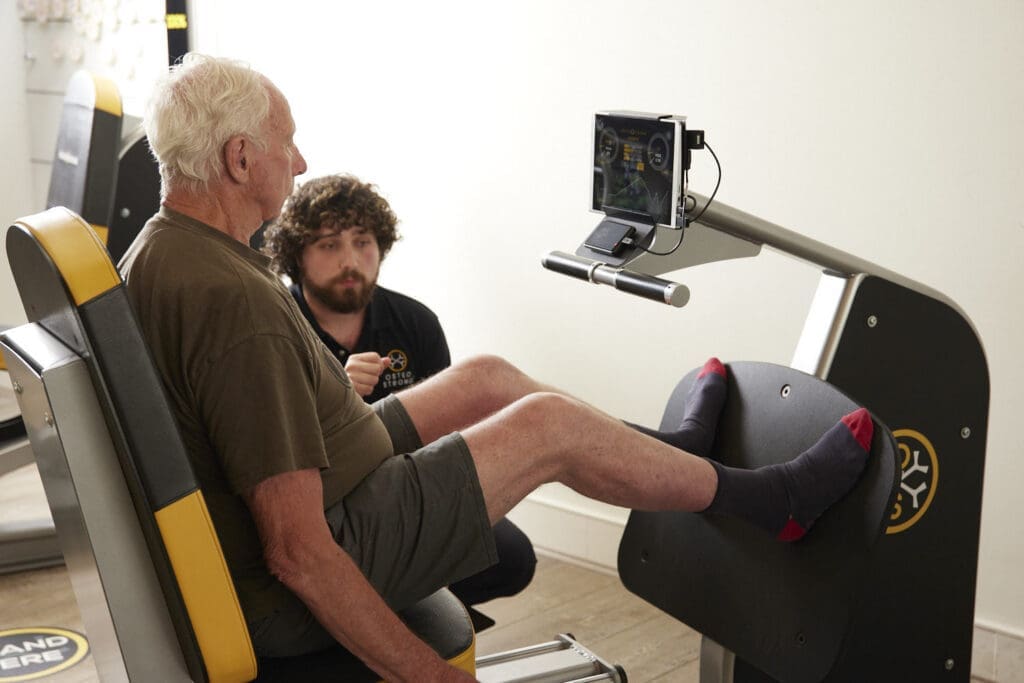
- Movements are performed in the safest biomechanically strong positions (~120° joint angles)
- There is minimal movement, reducing risk of poor technique
- The system allows you to safely apply high levels of force to your skeleton
- All sessions are coached and controlled, prioritising safety first
- All new members are taken through a Slow Start Protocol to eliminate injury risks
This means you can achieve the level of force needed to stimulate osteogenesis (bone building)—without the risks often associated with traditional lifting and impact training.
What is Important
- Avoiding exercise is not the answer
- Lifting with poor form is risky—but lifting correctly is protective
- With the right technique and environment, you can safely challenge your bones and improve strength, balance, and posture.
Strength training, when performed correctly, doesn’t just protect you from fractures—
it helps you build a stronger future and maintain your freedom and independence.
If you would like to learn how to train safely and effectively, speak to your local OsteoStrong® centre about a guided introduction.