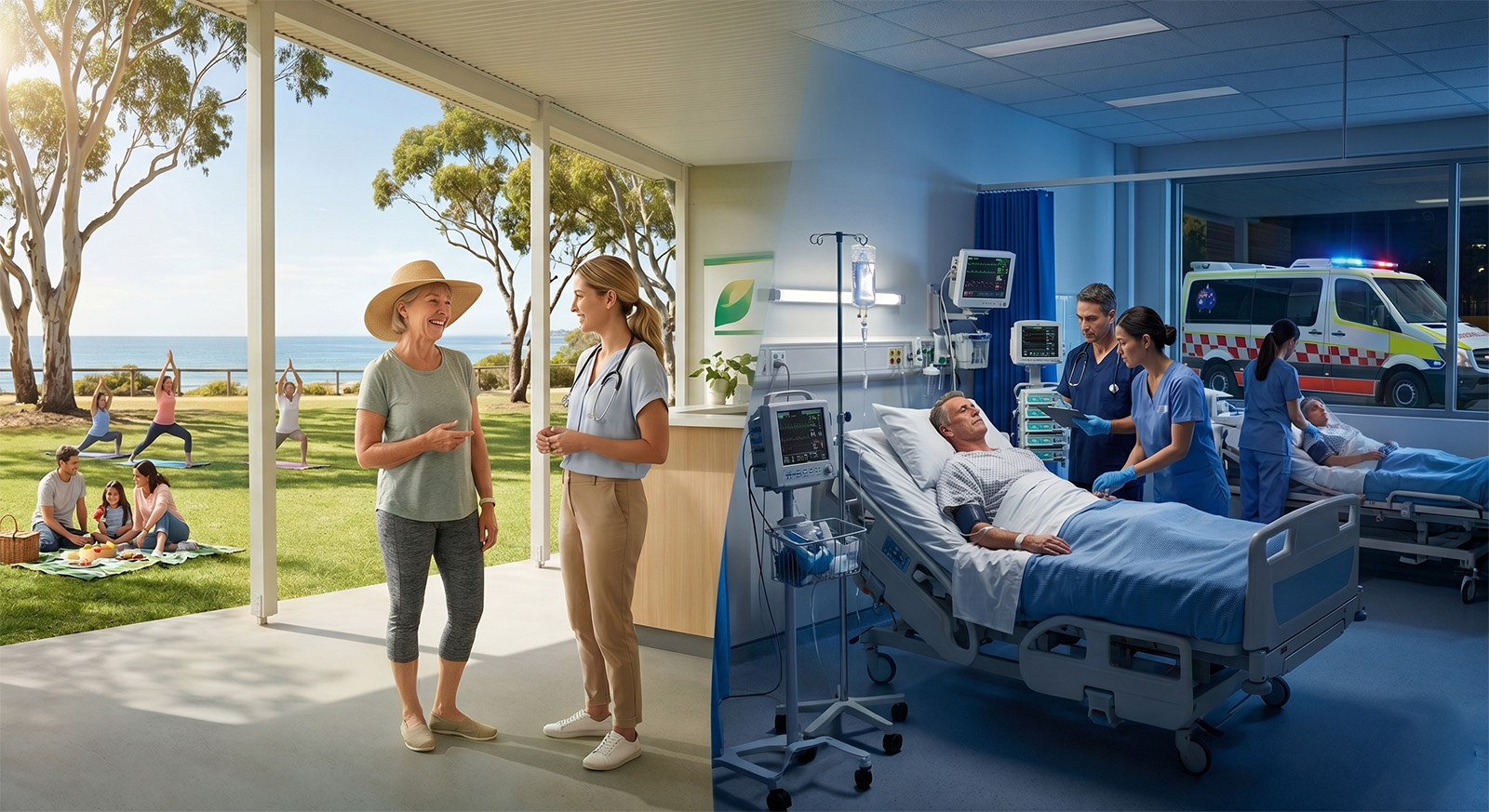
Australia’s healthcare system is world-class at treating illness.
But far less effective at preventing it.
In reality, it operates as a reactive system.
And that’s not healthcare… it’s sickcare.
We wait for symptoms.
We seek help.
We receive a diagnosis.
We’re prescribed medication to manage the condition.
And then we move on.
The Uncomfortable Truth
Despite decades of evidence showing prevention reduces both disease burden and long-term costs, only 2–3% of total health expenditure in Australia is directed toward preventative health.
The Slow Decline Most People Don’t See
Chronic conditions don’t appear overnight.
They develop gradually—often over decades—driven by:
- Poor nutrition and excess energy (food) intake
- Sedentary behaviour and lack of adequate mechanical loading
- Lifestyle factors such as alcohol and smoking
During this time, the body is already signalling decline:
- Bone mineral density falls
- Type II (fast-twitch) muscle fibres decline
- Metabolic efficiency and insulin sensitivity reduce
- Inflammation and cardiovascular strain increase
By the time conditions such as osteoporosis, Type 2 diabetes, or heart disease are diagnosed, the underlying deterioration is already well advanced.
The Structural Limitation
This is not a failure of clinicians.
It’s a limitation of the system.
True preventative healthcare requires:
- Frequent, in-depth consultation
- Continuous monitoring
- Longitudinal data analysis
- Ongoing behavioural coaching
These are fundamentally incompatible with short, episodic GP consultations.
A Fundamental Shift: AI-Enabled Prevention
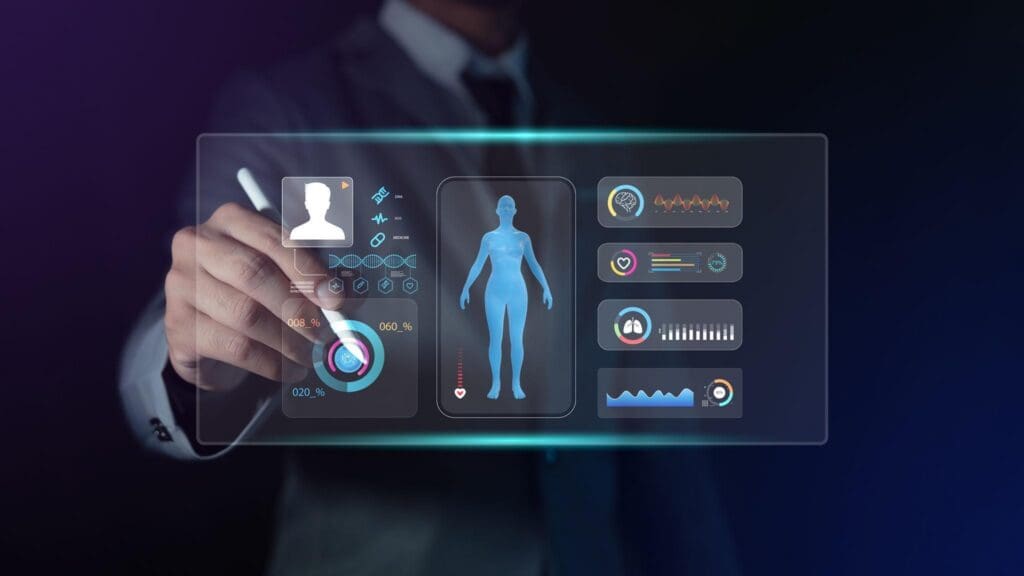
For the first time, artificial intelligence is beginning to bridge this gap.
AI systems—including platforms like ChatGPT, integrated with tools like the Apple Watch and Oura Ring—can now:
- Process large volumes of personal health data
- Detect early deviations from optimal baselines
- Track trends over months and years
- Deliver real-time, personalised recommendations
This introduces a new model of healthcare:
Continuous, data-driven, preventative health management.
Where OsteoStrong® Fits
Bone and muscle health are among the clearest examples of why this shift matters.
When we’re young, we run, jump, and build strength—most people reaching peak bone and muscle around age 30–35. After that, modern life becomes increasingly sedentary.
Without ongoing stimulation, bone density and muscle strength gradually decline—reducing balance, confidence, and the ability to do simple everyday tasks like lifting grandchildren or walking on uneven ground.
You cannot “supplement” your way out of bone loss. And the best medications do not improve muscle strength, balance or reaction speed.
While proper nutrition and lifestyle are essential to overall health, bone strength is fundamentally load-dependent.
Without sufficient osteogenic stimulus continuously over your lifetime:
- Bone density declines
- Muscle strength and power reduce
- Balance and reaction speed deteriorate
- Fall and fracture risk rises exponentially
This is why most traditional exercise fails to improve bone density—it simply does not reach the minimum effective loading threshold required to trigger osteogenesis (4.2 multiple of body weight for hip and femur bone – Deere UK 2012 Study).
Bone responds to the magnitude of load—not the frequency of exercise.
And while most people know they should maintain muscle strength as they age, they don’t. Time constraints, fatigue, and the inconvenience of conventional gym sessions mean consistency is rare. As a result, strength, balance, and reaction speed decline.
The OsteoStrong program solves this by delivering brief, once-weekly sessions that are both practical and achievable—making it far more likely people will stay consistent and maintain the muscle strength critical for long-term independence.
The Future of Healthcare
AI is rapidly enhancing preventative healthcare by adding continuous, data-driven insight that supports—not replaces—allied health professionals. It enables earlier detection and more personalised interventions while preserving the critical human element.
The convergence of:
- AI-driven insight
- Objective health data
- Targeted interventions like osteogenic loading
…creates a powerful opportunity.
A system where individuals can:
- Detect decline early
- Intervene precisely
- Maintain strength, structure, and independence with age
From Sickcare to Healthcare
We are moving from a world where:
Disease is managed late
To one where:
Health is built early and maintained continuously
The OsteoStrong® Difference
Bone and muscle health isn’t just about nutrition.
They also depends on lifestyle, medical factors, and—critically—adequate stimulation through appropriate and safe osteogenic loading.
Without the right stimulus, the body has no reason to build stronger bones and muscles.
OsteoStrong centres have delivered more than 12 million osteogenic loading sessions worldwide, maintaining a strong safety profile while working predominantly with individuals at the lowest levels of bone density.
Importantly, OsteoStrong® sessions are measurable and recorded, generating objective data on force output and progression over time. This data can be integrated into broader health analysis alongside nutrition, biomarkers, and lifestyle factors—bringing bone and muscle health into this new data-driven healthcare model.
Stay Strong & Independent.
If you want to improve your bone and muscle health—and remain strong, stable, and independent as you age—contact OsteoStrong® today to learn how we can help.