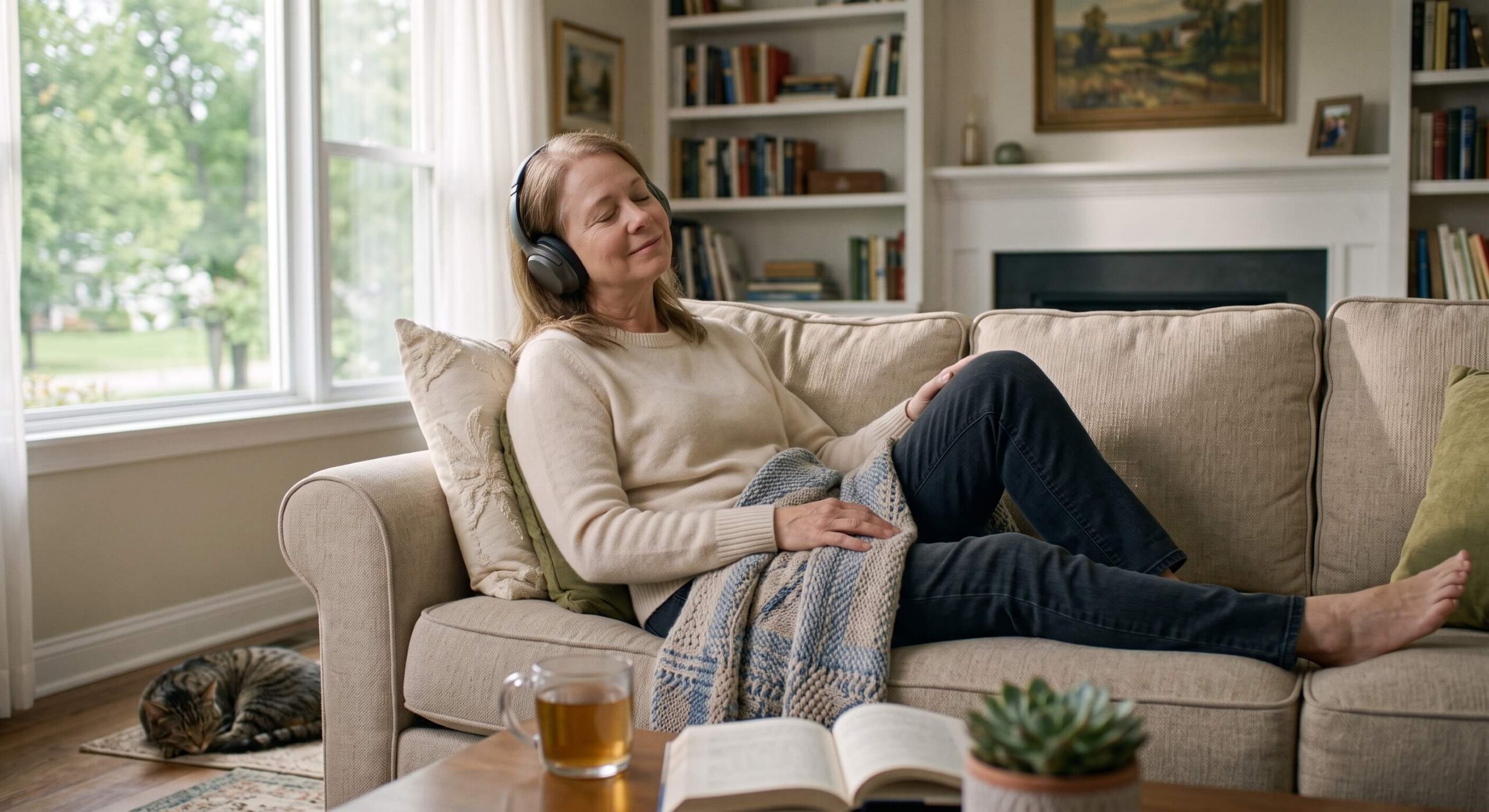
Our body needs challenge, but it also needs safety and recovery.
The nervous system is often discussed as though it should remain calm all the time. That is not how a healthy body works. We need the ability to become alert, raise our heart rate, recruit our muscles, and respond strongly when life demands it. We also need the ability to settle afterwards so our body can rest, repair, and adapt.
A healthy nervous system is therefore not permanently relaxed. It is flexible. It rises appropriately to meet a challenge and then returns efficiently towards recovery when that challenge has passed.
This balance becomes increasingly important with age. Poor sleep, persistent pain, illness, loneliness, inactivity, financial pressure, and fear of falling can all keep our body in a heightened state. When this continues, sleep and recovery may deteriorate, pain may feel worse and motivation to exercise may decline. Everyone needs challenge to remain capable, but we also need recovery to benefit from it.
Hormesis: Challenge Followed by Repair
Hormesis describes the way a controlled and appropriate stress can stimulate the body to adapt and become more resilient. Exercise is a familiar example. It temporarily challenges the muscles, cardiovascular system, and nervous system, but with sufficient recovery the body adapts and becomes better prepared for the next challenge.
The same principle applies to muscle and bone loading. During an OsteoStrong® session, the body applies high levels of force through the musculoskeletal system in a controlled and supervised environment. This creates a brief but significant stimulus. The session itself does not instantly build new muscle or bone. It sends the biological signal that these tissues are still required and need to become stronger.
The adaptation occurs after the loading event, when the body has time to repair, rebuild and become better prepared for the next challenge. This requires adequate protein, nutrients, sleep, and recovery.
Following resistance exercise, muscle protein synthesis remains elevated for approximately 24–48 hours. Bone responds differently: the loading signal is created quickly, but the cellular processes of formation and remodelling continue over weeks and months. Allowing about a week between high-magnitude osteogenic-loading sessions provides recovery before the next stimulus, but it does not mean that bone adaptation is completed within seven to ten days. The challenge initiates the response; repeated loading and recovery allow the benefits to accumulate over time.
Too little challenge provides an inadequate reason for the body to adapt. Too much stress without sufficient recovery can contribute to fatigue, poor performance and declining consistency. Healthy aging sits between these extremes: enough stimulus to create change, followed by enough recovery to make that change possible.
The Nervous System Controls the Response
The central nervous system plays an important role in how much force we can produce, how confidently we move and how efficiently our muscles work together. Stress, pain, fatigue, poor sleep, and fear can all change performance from one day to the next.
This is particularly relevant when someone first begins OsteoStrong® or another strength program. The body may be physically capable of producing more force, but the nervous system is also assessing safety. As confidence, technique and familiarity improve, the person can often apply more force safely and effectively.
After a demanding physical or emotional event, the body needs to move away from heightened activation and towards recovery. This does not require the nervous system to be perfectly “balanced” at every moment. It means developing the capacity to activate when necessary and then downshift when the challenge is over.
Slow breathing, gentle movement, quiet reflection, and good sleep can support that transition. They do not build bone or muscle by themselves, but they may help create the conditions in which recovery, consistency and adaptation are more likely.
This is also why OsteoStrong® offers rejuvenation therapies immediately after osteogenic loading, including HydroMassage, red-light therapy, compression, and PEMF. The loading session provides the controlled hormetic challenge; the therapies that follow are intended to help members transition from physical activation towards relaxation and recovery.
Depending on the therapy and the individual, these therapies may support comfort, circulation, and a greater sense of wellbeing. They do not create the bone-building response themselves, but they can complement the essential recovery period during which the body begins adapting to the loading stimulus.
Build the Foundations First
Before looking for nervous-system hacks, we need to examine the environment in which the system is operating. A breathing exercise may help in the moment, but it cannot compensate for chronic sleep deprivation, complete inactivity, persistent pain, excess alcohol, or isolation.
Sleep and circadian rhythm are among the most important foundations. Consistent sleeping and waking times, morning daylight and less bright light late at night help the body distinguish between activity and recovery. Poor sleep increases emotional reactivity, reduces pain tolerance, and makes ordinary problems feel more difficult.
Regular physical activity is equally important. Walking, cycling, swimming, sport, and other enjoyable movement provide a healthy outlet for nervous-system activation. Strength and skeletal loading provide a more specific physical signal. As strength improves, everyday tasks require a smaller proportion of our total capacity.
Climbing stairs, carrying shopping, getting out of a chair, or recovering from a stumble all become easier when the body has greater physical reserve. A stronger body also sends the brain a powerful message: ordinary movement is manageable rather than threatening.
Social connection and time in nature add another layer. Supportive human contact reduces the feeling that every challenge must be managed alone, while natural environments encourage movement and provide some distance from screens, noise, and constant stimulation.
These foundations will generally do more for healthy ageing than any single breathing technique or vagus-nerve stimulating gadget.
Train the Ability to Recover
Nervous-system regulation can be trained in much the same way as strength or balance. A technique practised while calm is more likely to be useful during a genuinely stressful moment.
Slow, comfortable breathing is one of the simplest tools. Breathing at around five or six breaths per minute, without forcing the lungs, may help reduce unnecessary arousal. Inhaling for four seconds and exhaling for six seconds is a practical starting point. A slightly longer exhalation may be helpful in the evening or after a physically demanding session.
Mindfulness and meditation can help us notice thoughts, emotions, and physical tension without reacting immediately. Progressive muscle relaxation uses a similar principle by deliberately tensing and releasing different muscle groups. Tai chi, gentle yoga, and flowing movement may suit people who find sitting meditation uncomfortable or frustrating.
These practices do not need to become elaborate rituals. Five minutes of regular practice may be more useful than an occasional 45-minute session. Consistency teaches the body how to shift state more efficiently.
Use Short Tools When Stress Arrives
The physiological sigh can be useful during acute tension. It involves one inhale, a second smaller inhale and then a long, slow exhale. One or two repetitions may help before replying to a difficult email, entering a medical appointment, or approaching a challenging task.
A short walk, several longer-exhale breaths or a few minutes of gentle mobility can also help the body move out of a heightened state. The objective is not to deny the problem. It is to create enough space to respond more clearly.
Box breathing is another simple technique worth learning. Breathe in gently for four seconds, hold for four, breathe out slowly for four, then pause for four before beginning again. Repeat the cycle four to six times, keeping the breath relaxed rather than forced. If the holds feel uncomfortable or cause dizziness, return to normal breathing or use a longer-exhale technique without holding.
Movement should match the situation. Someone who is agitated may benefit from quiet walking and slower breathing. Someone who feels flat or withdrawn may need brighter light, brisk movement, music, or social contact. Regulation does not always mean slowing down. Sometimes the system needs safe activation.
This can also improve performance in everyday activities. A person who is rested, focused and not carrying unnecessary muscular tension may move more confidently, react more effectively, and use their available strength more efficiently. Better recovery after one challenge leaves more physical and mental capacity for the next.
A Brief Stillness and Awareness Practice
Sometimes the best way to begin regulating the nervous system is simply to stop and notice what is happening within and around you.
Sit comfortably in a supported, upright position and allow your shoulders, jaw, and hands to soften. Close your eyes if that feels safe, or lower your gaze. Slow your breathing without forcing it and notice where your body is holding unnecessary tension. With each exhalation, allow that tension to slowly release.
Next, expand your awareness to the sounds around you. Notice the nearest or loudest sounds first, then listen beyond them for quieter or more distant ones. There is no need to identify or judge anything. Simply allow each sound to enter and leave your awareness for 20–30 seconds.
Slowly open your eyes or lift your gaze. Without immediately looking around or reaching for your phone, take in the light, colours, and shapes within your environment. Notice whether your breathing, posture or muscular tension has changed.
Finish by bringing to mind one person, event, or simple part of life for which you feel grateful. It does not need to be profound. A conversation, a family member, a small success, or a moment of good news is enough.
This brief practice combines body awareness, open-monitoring mindfulness, and gratitude. Research suggests that these practices can support attention, stress management, and wellbeing, although the effects are usually modest initially but increase with repetition. You may not experience stillness or joy every time, but with practice it can become easier to pause, release unnecessary tension and return to the day with greater calm and perspective.
Stress, Recovery and Healthy Ageing
Nervous-system regulation, muscle health and bone health are intricately connected. Persistent stress and poor sleep can reduce motivation, increase pain sensitivity and interfere with recovery. People then move less, lose strength and become less confident.
The decline reinforces itself. A weaker body makes daily activity feel harder. Fear of falling increases, movement becomes guarded and the nervous system receives even more messages that the environment is unsafe.
Improving strength can reverse this trajectory. When the body becomes more capable, ordinary tasks require less effort and feel less threatening. Better balance and physical reserve increase confidence, while greater confidence encourages further activity.
However, relaxation does not replace physical stimulus. Meditation may help someone approach exercise more calmly and breathing may support recovery, but muscles still need resistance and bones still need appropriate loading.
The complete healthy-ageing signal is physical/mental challenge, followed by recovery.
A Practical Approach
Build the foundations through sleep, morning light, regular movement, appropriate strength and skeletal loading, good nutrition, and meaningful social connection.
Train one regulatory practice each day. This might be five minutes of slow breathing, mindfulness, progressive muscle relaxation, or gentle movement.
Use short tools when pressure arrives. Try a physiological sigh, several longer-exhale breaths, a brief walk, stillness practice or a quiet transition between work and home.
After an OsteoStrong® session, exercise or another significant stress event, support the body with appropriate nutrition, hydration, movement, and sleep. Allow time for repair rather than continually adding more stress because more must be better.
The goal is not to remove challenge from life. Without challenge, the body has no reason to adapt. The goal is to provide the right amount of stress, recover from it and return stronger.
Build the capacity to activate. Train the ability to recover. Use both when life demands them.
That is hormesis in action: an appropriate challenge followed by sufficient recovery, allowing the body to adapt and become more capable. It is a foundation of resilience, performance and healthy aging—and a central principle behind the way OsteoStrong® works.