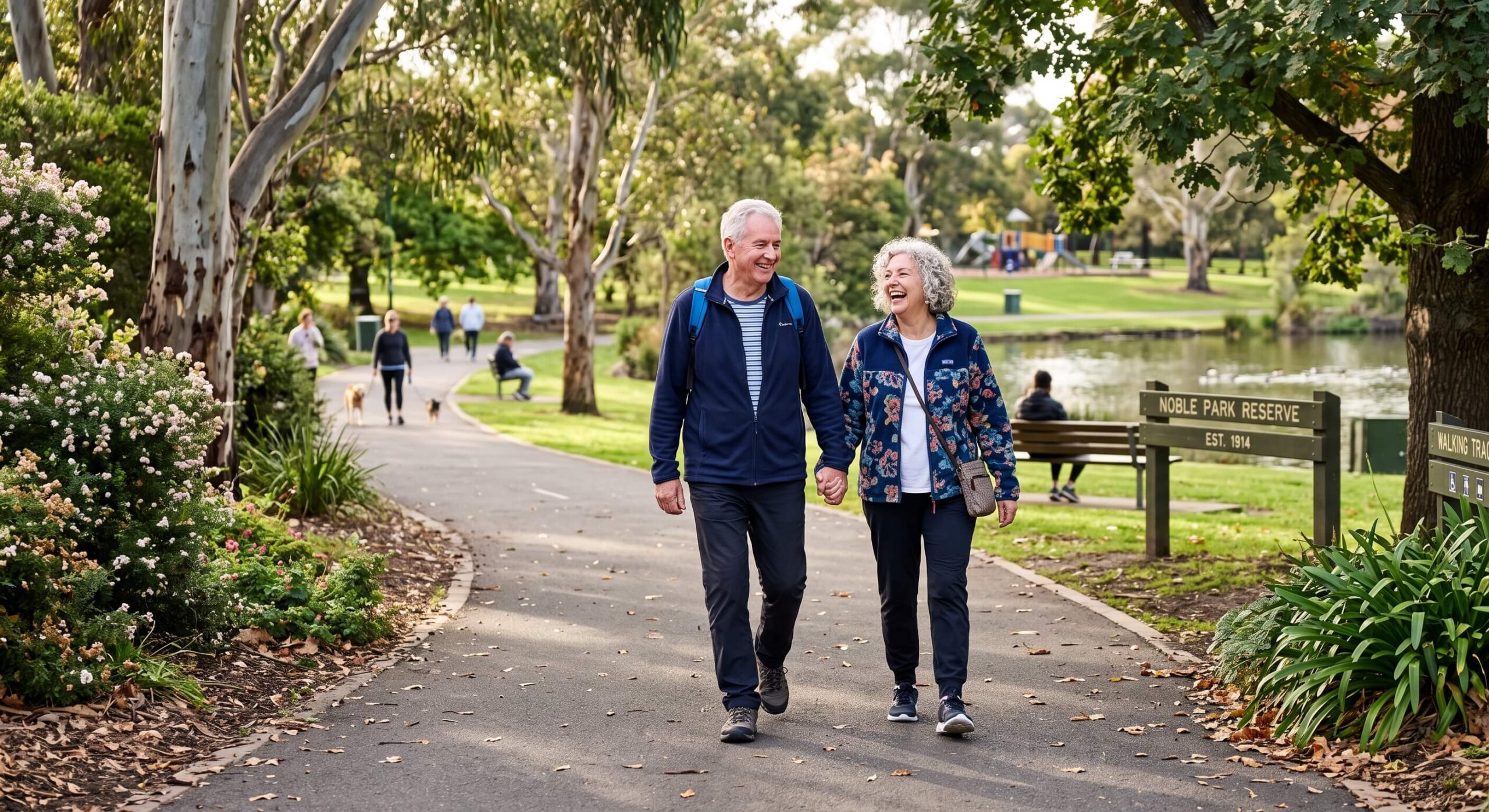
Growing older is unavoidable. Becoming frail is not necessarily the same thing.
Frailty usually develops gradually as muscle strength declines, movement becomes more difficult and the body becomes less resilient. Early changes can appear insignificant: walking more slowly, avoiding stairs, struggling to rise from a chair or taking longer to recover from an infection.
Individually, these signs are easy to dismiss. Together, they may reveal a changing ageing trajectory.
The encouraging news is that trajectories can change. When declining strength, poor nutrition, medication side effects and reduced activity are recognised early, there are opportunities to preserve function and independence.
Frailty is not normal ageing
Frailty is a recognised clinical condition involving reduced physical reserves and increased vulnerability across multiple body systems.
A respiratory or bladder infection might represent a minor inconvenience for a robust person. For someone living with frailty, the same illness can trigger a dramatic decline in mobility, cognition and independence.
Some people recover slowly. Others never fully regain their previous capabilities.
The World Health Organization describes healthy ageing in terms of maintaining the combined physical and mental abilities required to continue doing the things that matter.
Chronological age tells you how long someone has lived. Functional capacity tells you how well they are living.
A person in their eighties can remain active and independent, while someone in their 40’s may already be experiencing the limitations commonly associated with old age.
The difference is not simply the number of birthdays. It is the trajectory. The journey to frailty can also be complicated by accidents, disease, and illnesses.
You do not wake up frail
Frailty commonly emerges through an accumulation of smaller changes.
A knee becomes painful, so someone walks less. Reduced activity weakens the muscles supporting the knee, making movement more difficult. Balance deteriorates. Stairs become harder. Confidence declines and social activities are avoided.
Meanwhile, appetite may fall, protein intake decreases and muscle gradually disappears. Medications can contribute to dizziness or fatigue. Eventually, a minor illness exposes how little physical reserve remains.
What appears to be a sudden decline has often been developing for years.
The journey to frailty may also be complicated by injury, disease, illness, and medications. But the underlying thread is disuse – use it or lose it.
That is why statements such as, “It is just your age,” can be so damaging. Pain, weakness, dizziness and poor balance deserve investigation. Common does not mean inevitable.
Warning signs you should not ignore
Walking more slowly, difficulty rising from a chair, relying increasingly on handrails, and avoiding stairs can all indicate declining physical capacity.
Other signs include unintentional weight loss, weaker grip, persistent exhaustion, reduced appetite, falls or near-falls, and slower recovery from illness.
One of the most useful questions is surprisingly simple:
What can you no longer do that you could comfortably do a year ago?
Perhaps you struggle to keep up with friends, carry groceries, manage luggage or get down to play with grandchildren.
These changes can reveal declining independence long before a major health crisis occurs.
Weight alone can also be misleading. A person may celebrate losing weight while unknowingly losing the muscle they need to remain capable.
The better question is not, “How much weight have I lost?”
It is, “How much strength and muscle have I preserved?”
A chair can reveal your ageing trajectory
A simple five-times sit-to-stand test can provide useful insight into leg strength, balance and functional mobility.
Using a stable chair, stand up and sit down five times as quickly as you safely can. Taking around 17 seconds or longer can suggest that further assessment may be worthwhile, although results must always be interpreted in the context of age, health and testing conditions.
Grip strength, walking speed and balance offer additional clues.
The purpose is not to become anxious about a single result. It is to determine whether your functional capacity is improving, stable or declining.
If capability is never measured, declining independence can remain unnoticed until it becomes difficult or too late to reverse.
Medicine can extend life, but cannot replace strength
Modern medicine has helped more people survive conditions that once shortened their lives. General practitioners play an essential role in diagnosing illness, managing chronic disease and prescribing appropriate treatment.
But the conventional healthcare system is often better at managing disease than systematically preventing frailty.
A person can have well-controlled blood pressure, acceptable cholesterol, pre diabetes, and an extensive medication list while becoming progressively weaker.
Their medical numbers may improve marginally while their functional capacity continues to deteriorate.
Medication can manage blood pressure and diabetes. It can reduce important health risks. But it cannot practise standing up from a chair, improve balance through repetition or build muscle without the body receiving an appropriate physical stimulus.
There is no tablet that substitutes for adequate nutrition, strength-building activity and regular movement.
Medicine can help you reach old age. Protecting your independence requires something more that only you control.
A broader assessment can reveal hidden risks
A Comprehensive Geriatric Assessment, or CGA, is a team-based, holistic evaluation of an older adult’s medical, mental, functional and social needs, used to create a personalised care plan.
Unlike a standard medical check-up, a CGA examines multiple aspects of a person’s life to identify hidden problems, protect independence and improve quality of life.
This may include reviewing medications, assessing mobility and balance, identifying nutritional deficiencies, evaluating memory and mood, and considering whether a person has appropriate social support.
It recognises that declining health rarely has a single cause. Pain, poor sleep, medication side effects, inadequate protein, isolation and reduced movement may all be contributing simultaneously.
Instead of asking only, “What disease does this person have?” the more useful question becomes, “What is reducing this person’s ability to live independently, and what can we do about it?”
Muscle is the currency of independence
Muscle does more than create movement. It supports balance, protects joints, contributes to metabolic health and provides the physical reserve needed to recover from illness.
When muscle is lost, stairs become harder, falls become more likely and everyday tasks begin requiring greater effort.
Walking and remaining active are valuable, but preserving muscle and bone also requires specific strength-building signals.
Resistance training, repeated sit-to-stand movements and other forms of appropriately supervised loading tell the body that strength is still needed.
For some people, that may involve a structured strength program. For others, it begins with standing up from a chair several times, using resistance bands or practising supported balance.
The objective is not perfection. It is giving the body a reason to adapt.
What has been deconditioned through disuse can usually be improved with the appropriate stimulus. Research has shown that this stimulus can be remarkably quick and easy for most people. Simple home exercise and convenient programs like OsteoStrong can make a big difference.
This reminded me of the older lady who started at OsteoStrong Hawthorn in 2018 and arrived using a walking frame. After less than 10 months she progressed from the walking frame to a walking stick. Then as her strength and balance improved, she said she relied even less on the walking stick. What a remarkable difference that make to her mobility, confidence, and quality of life.
Protein provides the building materials
Exercise tells the body to maintain or build muscle. Protein provides the resources required to do it.
New research has shown that older adults require twice the amount of protein than younger people for a number of physiological reasons. This means that depending on age, weight and condition, they need between 1.6-2.0 grams of protein per kg of body weight. For someone weighing 70 kilograms, that means approximately 112-140 grams each day, although individual requirements vary.
A practical approach is to include a meaningful source of protein with each main meal. That means about 35-45 grams per meal.
Understanding the amount of protein in typical foods is therefore important. Two eggs contain approximately 12–14 grams of protein, so adding Greek yoghurt, cottage cheese or another protein-rich food can create a more substantial breakfast.
A palm-sized serving of chicken, fish or lean meat commonly provides around 25–30 grams. Adding tofu, tempeh, lentils, beans, dairy products and suitable protein supplements can also help meet individual dietary preferences and cultural requirements.
People with kidney disease should seek medical advice before substantially increasing protein intake.
The important principle is simple: without adequate protein and an appropriate physical stimulus, maintaining muscle becomes increasingly difficult. If you do not have enough protein your biology will cannibalise muscle for the protein needed by other cellular functions resulting in sarcopenia (loss of muscle mass) dynapenia (loss of muscle strength), and possibly osteoporosis (loss of bone density).
Small actions can change the trajectory
Telling someone to exercise more or substantially change their lifestyle rarely creates lasting change. Connecting movement to a meaningful goal is more effective.
Do they want to remain in their own home, travel confidently, walk with friends or play with grandchildren? Can they still go walking with friends or walk to the local shops for coffee?
Once the goal is clear, a small simple and achievable goal can be set. And because most people have a competitive nature, setting a small challenge can often be exceeded by a much bigger result.
Five chair stands after breakfast. A short daily walk. A protein-rich lunch. A regular balance exercise. A medication review.
Small simple actions, repeated consistently, can change the direction of decline. You do n or need to join a gym to see real progress.
Practical steps to protect your independence
- Measure function: Track walking speed, balance, grip strength, and your ability to rise from a chair.
- Recognise warning signs: Investigate fatigue, falls, weakness, unintentional weight loss and declining mobility.
- Build strength: Include regular resistance training or appropriately supervised strength-building activities – this can include weights, OsteoStrong, or a suitable strength program tailored for older people.
- Prioritise protein: Include protein-rich foods throughout the day to support muscle maintenance.
- Protect muscle during weight loss: Avoid losing weight without considering what is happening to muscle and strength.
- Review medications: Ask whether prescriptions may contribute to dizziness, fatigue, falls or reduced appetite.
- Stay socially engaged: Physical capability, brain health and meaningful connection influence one another.
- Request a broader assessment: Discuss frailty screening or a Comprehensive Geriatric Assessment if independence is declining.
Growing older is inevitable. Becoming progressively weaker and less capable should not be accepted without question simply because of age.
The goal is not simply to reach old age. It is to arrive there with the strength, resilience and independence to continue living on your own terms.
You cannot help getting older, but you do not have to get old.