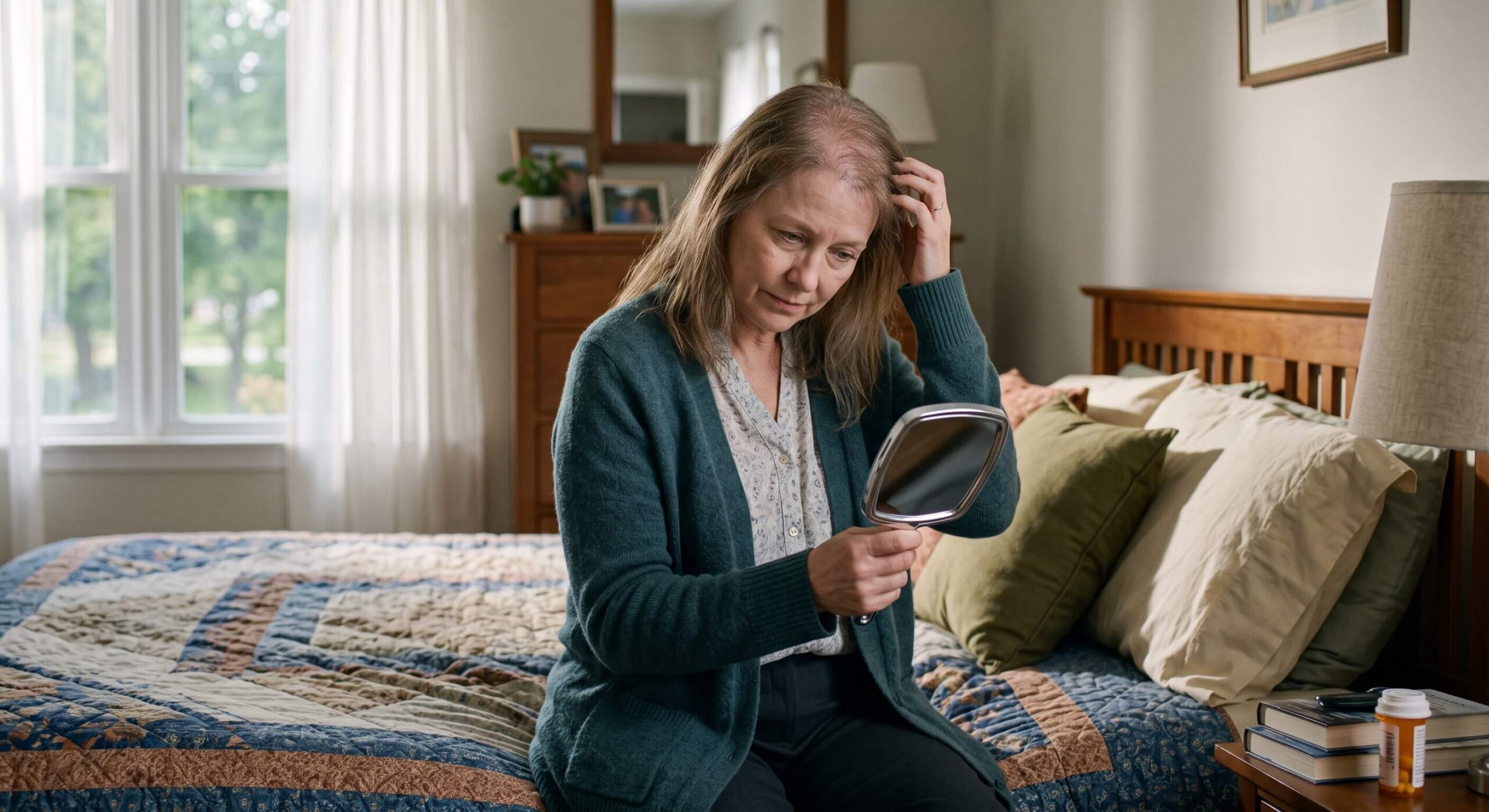
Hair loss is often treated as a cosmetic problem, but for women it can sometimes be an early signal that something deeper has changed. The cause may be genetic, hormonal or related to ageing, but increased shedding can also indicate iron deficiency, thyroid dysfunction, inadequate protein, rapid weight loss, illness, stress or poor nutrient absorption.
The encouraging message is that many of these causes can be identified, treated or managed. Hair follicles are living structures, and in many cases they can recover when the body is given the nutrients, hormonal support, medical treatment and time it needs.
Hair loss may also provide an opportunity to identify problems affecting energy, muscle and bone health before they create more serious consequences. Rather than seeing it only as something being lost, we can view it as useful information from a body asking for attention.
Hair Is Not Essential for Survival
The body constantly decides where to allocate its available energy and nutrients. The heart, brain and other vital organs take priority. Hair growth does not.
When food intake becomes inadequate, iron stores fall, illness places the body under stress or weight is lost rapidly, the body may temporarily reduce hair production. More follicles enter the resting stage of their growth cycle, with increased shedding often appearing two or three months after the triggering event.
This is known as telogen effluvium. It can follow surgery, infection, emotional stress, childbirth, rapid weight loss or a severely restrictive diet. The delay means the connection is easily missed. A woman may notice substantial shedding in June without connecting it to an illness, operation or crash diet in March.
The reassuring fact is that telogen effluvium will often improve once the underlying trigger has been addressed. Hair grows slowly, so patience is required, but new growth may begin within months and thickness can gradually return. The body is not necessarily failing. It may simply be recovering from a period of significant stress.
Iron, Energy and Physical Capacity
Iron deficiency is one of the nutritional problems that should be considered when a woman develops excessive hair shedding. Iron helps produce haemoglobin, which carries oxygen throughout the body, including to the tissues supporting hair follicles, muscles and bones. Ferritin is the protein used to store iron and can reveal declining reserves before severe anaemia develops.
Women who menstruate heavily, eat little red meat, follow vegetarian or vegan diets, donate blood regularly or have digestive and absorption problems may be particularly vulnerable. Fatigue, poor concentration, headaches, breathlessness, reduced exercise tolerance, restless legs and brittle nails may provide additional clues.
Low iron affects much more than hair. It can reduce the ability to exercise and maintain muscle, while fatigue encourages inactivity. Less movement and lower muscular loading eventually mean weaker signals to the skeleton. What first appears to be a hair problem may therefore help uncover a wider issue affecting energy, muscle strength and bone health.
This is where there is real opportunity. Identifying and treating genuine iron deficiency may improve much more than hair growth. It may restore energy, concentration and the ability to move and exercise consistently.
The answer is not to take iron blindly. Excess iron can be harmful, and ongoing deficiency may be caused by blood loss or a digestive condition that needs investigation. A full blood count, ferritin and iron studies provide a better starting point. If deficiency is confirmed, the cause can be investigated and an appropriate supplement recommended. Iron bisglycinate may be better tolerated by some people, but it should still be taken according to an identified need.
Protein Builds More Than Muscle
Hair is made largely from keratin, a protein. When calorie or protein intake falls too low, the body may reduce its investment in hair growth. This can occur during crash dieting, illness, poor appetite or rapid weight loss.
Protein also provides the amino acids needed to maintain muscle, support the bone matrix and repair connective tissue. Hair, muscle and bone therefore depend on many of the same nutritional resources. A diet that is just adequate for survival may not be sufficient to support optimal hair growth, muscle maintenance and skeletal strength as we age.
Drinking collagen or protein powder will not automatically restore lost hair, but eating sufficient quality protein from eggs, fish, meat, dairy or carefully combined plant sources provides an important foundation. Adequate protein, combined with regular muscle and skeletal loading, gives the body a reason and the raw materials to maintain itself.
The objective should not be weight loss at any cost. Losing fat while also losing hair, muscle and bone is not a successful healthy-ageing strategy. A better goal is to reduce excess fat gradually while protecting protein intake, muscle strength, bone health and overall nutrition.
Older adults need more high-quality protein than younger people because the ageing body becomes less efficient at digesting, absorbing and using protein to build and maintain muscle and bone – a process known as anabolic resistance. Yet this increased need often arrives just as appetite and total food intake begin to decline. The challenge of healthy aging is therefore not simply to eat more, but to make every meal count by prioritising sufficient high-quality protein within a smaller overall quantity of food. Eating enough protein at every meal time therefore becomes a high priority.
GLP-1 Drugs, Appetite and Hair Loss
GLP-1 weight-loss drugs such as semaglutide and tirzepatide reduce appetite, which can make it much easier to eat fewer calories. However, if appetite falls too far or weight is lost very rapidly, some people may also consume insufficient protein, iron, zinc and other nutrients needed to maintain hair, muscle and bone.
Emerging research has found an association between GLP-1 drugs and non-scarring hair loss, although it is not yet clear whether the medication directly affects hair follicles. In many cases, the more likely explanation is telogen effluvium triggered by rapid weight loss, reduced food intake and the physiological stress of a substantial change in body weight.
The same nutritional shortfall that contributes to hair shedding may also accelerate muscle and bone loss. This is particularly important for women during and after menopause, when muscle and bone are already more vulnerable. Anyone using a GLP-1 drug should therefore aim to lose fat while preserving the tissues that protect healthy ageing by consuming adequate protein, maintaining good overall nutrition and continuing appropriate muscle and skeletal loading.
Hair shedding related to rapid weight loss is often temporary and may improve as weight stabilises and nutritional intake is restored. It is not necessarily a reason to stop an effective medication, but it is a reason to speak with the prescribing doctor, review the rate of weight loss and check for deficiencies rather than simply adding a hair supplement. Do not stop or change a prescribed GLP-1 medication without medical advice.
Menopause Changes the Environment
During and after menopause, falling oestrogen and progesterone change the environment in which hair follicles, muscles and bones operate. Hair may become finer and grow more slowly, while genetically susceptible women may notice a widening part or more general thinning.
At the same time, declining oestrogen accelerates bone loss and contributes to changes in muscle and body composition. Fat is more likely to accumulate around the abdomen, insulin sensitivity may decline and maintaining muscle can become more difficult.
Hair thinning during these years is therefore not always caused by one missing nutrient or hormone. It may reflect the combined effects of genetics, menopause, nutrition, metabolic health, sleep and ageing.
This does not mean that decline is inevitable. Menopause changes the strategy required, but the body remains adaptable. Adequate protein, strength and skeletal loading, good sleep, appropriate medical care and improved metabolic health can support muscle, bone and general wellbeing during and after this transition.
Hormone replacement therapy should not be regarded as a general treatment for hair loss. It may be appropriate for some menopausal women, but its benefits and risks need to be assessed individually with a qualified clinician.
Female-Pattern Hair Loss Can Be Managed
The most common cause of hair loss in women is female-pattern hair loss. It generally produces gradual thinning across the top of the scalp or a widening part rather than the distinct receding hairline commonly seen in men. It frequently becomes noticeable during the 40s, 50s or 60s.
Because female-pattern hair loss can resemble shedding caused by iron deficiency, thyroid disease or other conditions, self-diagnosis is unreliable. A dermatologist can distinguish between progressive pattern loss, temporary shedding and less common inflammatory or scarring conditions.
Early assessment provides more options. Treatments such as topical minoxidil can help some women maintain or regrow hair, although results take time and usually depend on continued use. Other prescription treatments may be considered after an appropriate medical assessment.
Not every cause can be completely reversed, but progression can often be slowed and appearance improved. Knowing the cause replaces uncertainty with a practical plan.
Thyroid Health Connects the Systems
Both underactive and overactive thyroid conditions can contribute to diffuse hair thinning. Thyroid dysfunction can also affect energy, body weight, heart rate, mood, bowel function, muscle and bone.
Untreated hyperthyroidism can accelerate bone loss and weaken muscle, while significant hypothyroidism may cause fatigue, reduced activity and muscle discomfort. Hair loss accompanied by unexplained weight change, sensitivity to cold or heat, constipation, tremor, palpitations or persistent fatigue warrants investigation.
The positive side is that thyroid conditions are usually identifiable through appropriate testing and can often be treated effectively. Hair recovery may be gradual, but diagnosing the problem can also protect cardiovascular, metabolic, muscle and bone health.
Hormonal testing may be appropriate when hair loss occurs with irregular periods, acne, increased facial hair or other signs of excessive androgen activity.
A receding frontal hairline, eyebrow loss, distinct bald patches, or a scalp that is red, painful, burning or scaly should be assessed promptly. Some inflammatory conditions can scar hair follicles, making early treatment particularly important.
As explained in my other articles, thyroid health is also critical to maintaining muscle, bone and metabolic function. Detecting and treating thyroid dysfunction early may therefore deliver benefits extending well beyond improved hair growth, helping to protect strength, skeletal health, energy and overall healthy ageing.
Be Careful with Hair Supplements
The hair-supplement market thrives because people understandably want a quick solution. Products commonly contain biotin, zinc, selenium, iron, vitamin A, vitamin E, collagen and multiple herbal ingredients. The label may look impressive, but more is not always better.
Biotin deficiency is uncommon in people eating a normal diet, and high-dose biotin can interfere with thyroid and cardiac blood tests. Excess vitamin A, selenium and vitamin E may contribute to hair loss or other health problems. Iron and zinc should not be taken indefinitely without evidence that they are needed.
This does not mean that supplements have no value. When testing identifies a genuine deficiency, appropriate supplementation may make a meaningful difference. The key is to replace what is missing rather than swallowing everything that appears on a hair-growth label.
Testing should come before guessing.
Look Beyond the Hair
There is no single blood panel appropriate for every woman, but your Doctor can consider a full blood count, ferritin and iron studies, thyroid function, vitamin B12 and folate. Vitamin D, zinc, hormone testing or further investigations may be appropriate depending on symptoms, diet and medical history.
The pattern and timing of hair loss are just as important as blood tests. Has there been rapid weight loss, reduced protein intake, heavy menstruation, illness, surgery or significant stress? Has a new medication or GLP-1 been introduced? Are there digestive symptoms suggesting poor absorption? Are there symptoms of menopause or thyroid dysfunction?
Hair loss can affect confidence and emotional wellbeing and should not be trivialised. However, investigating it may reveal a correctable problem and provide the motivation to improve nutrition, metabolic health, muscle strength and skeletal protection.
The Healthy Ageing Principle
Hair, muscle and bone may appear to be separate tissues, but they depend on many of the same foundations: adequate nutrition, sufficient protein, healthy thyroid and hormone function, good blood supply, metabolic health, mechanical loading and recovery.
A woman who is rapidly losing weight, eating too little protein and becoming iron deficient may also be losing muscle and weakening her bones. Correcting the underlying problem may therefore do much more than improve her hair. It may restore energy, physical capacity and the resources required to remain strong and independent.
The hopeful message is that the body remains capable of adaptation. Hair can regrow after temporary shedding. Deficiencies can be corrected. Thyroid conditions can be treated. Progressive hair loss can often be managed. Muscle can be rebuilt and bones can respond to appropriate loading.
The earlier you recognise the signal, the more opportunity you have to change the trajectory.
Do not simply supplement the symptom. Identify the cause, correct genuine deficiencies, consume adequate protein, challenge muscles and bones at OsteoStrong® and support your entire biological system.
Sometimes the hair is not the main problem. It is simply the first place the problem becomes visible—and that early warning may become the reason your better health journey begins.
Action Items
Notice whether the change is sudden shedding, gradual thinning, a widening part, distinct patches or a receding frontal hairline. Think back several months for triggers such as illness, surgery, severe stress, rapid weight loss, a new medication, or dietary restriction.
Ask your doctor whether blood count, ferritin and iron studies, thyroid function, B12 and folate testing are appropriate. Ensure that you are consuming sufficient energy and quality protein, particularly while losing weight and during and after menopause.
Avoid taking iron, high-dose biotin or large combinations of hair vitamins without identifying a genuine need. Seek early dermatological advice for progressive thinning, bald patches, eyebrow loss or a painful, red, scaly or scarred scalp.
There is no reason to panic and no reason to give up. Listen to the signal, investigate the cause and give your body the resources and time it needs to respond.